The popularity of cross-chain NFT marketplace solutions has expanded rapidly beyond the confines of single-chain ecosystems, causing an increase in NFT demand. The increased demand has resulted in many more cross-chain NFT marketplace developments, creating numerous advantages like increased liquidity, accessibility, and interaction between communities, enabling the development of a cross-chain NFT bridge.
The growing diversity of chains denotes that there is a dire need for a more unified cross-chain NFT platform to allow seamless exchanges of NFTs. Being able to trade non-fungible tokens across chains allows the elimination of silos and creates a single NFT cross chain bridge for all users across networks.
What Are Multi-Chain NFT Marketplaces?
A multi-chain NFT marketplace lets users trade, mint, and buy digital goods or collectibles across various blockchains instead of being locked into just one. By integrating different chains such as Ethereum, Polygon, Solana, and BNB Chain, users can access a larger variety of collections and NFTs, and select blockchains that meet their needs, based on speed, cost, etc.
Multi-chain NFT marketplaces allow better liquidity, less congestion, and lets artistic creation and collection happen in a collaborative environment among multiple ecosystems by increasing accessibility and flexibility in trading them.
Quick Overview
| Metric | Chain Support | Fiat Onramp | NFT Categories | Unique Edge |
| OpenSea | Ethereum, Polygon, Avalanche, Arbitrum, and more | Crypto-only | Digital Art, Collectibles, Music & Audio, Virtual World, Gaming, Domain Names, Photography, Sports, Utility, Show Tickets | Largest NFT marketplace with cross-chain flexibility and high liquidity |
| Magic Eden | Solana, Bitcoin, Ethereum, Base, Polygon, BNB Chain, and more | Fiat-to-crypto onramp and offramp | Generative Art, Gaming, In-Game Assets, Collectibles, Music, Phygitals, Ticketing, Literature & Publishing, Platform & Utility NFTs | Low fees, fast settlement (especially on Solana), and easy Fiat-purchase options |
| OKX NFT Marketplace | 130+ native chains, including Ethereum, Bitcoin, BNB Chain, Solana, Ripple, Arbitrum, and more. | Fiat onramp | Art, Gaming, Collectibles, Music, Bitcoin Ordinals, Gamefi, Metaverse Assets, Photography, Sports | Broader chain support, support for newer NFTs, and lower fees |
| Binance NFT | Ethereum, BNB Chain, Polygon | Fiat onramp | Art, Collectibles, Gaming Items, Virtual Real Estate, Music, Sports, Utility | Tight integration with exchange ecosystems, huge user base, liquidity advantages |
| Coinbase NFT | Ethereum | Crypto-only | Art, Collectibles, Gaming & Virtual Worlds, Music, Photography, Sports, Utility, Web3 Domains | Strong Ethereum support, simple user interface |
Explore the 5 Multi-Chain NFT Marketplaces
1. OpenSea
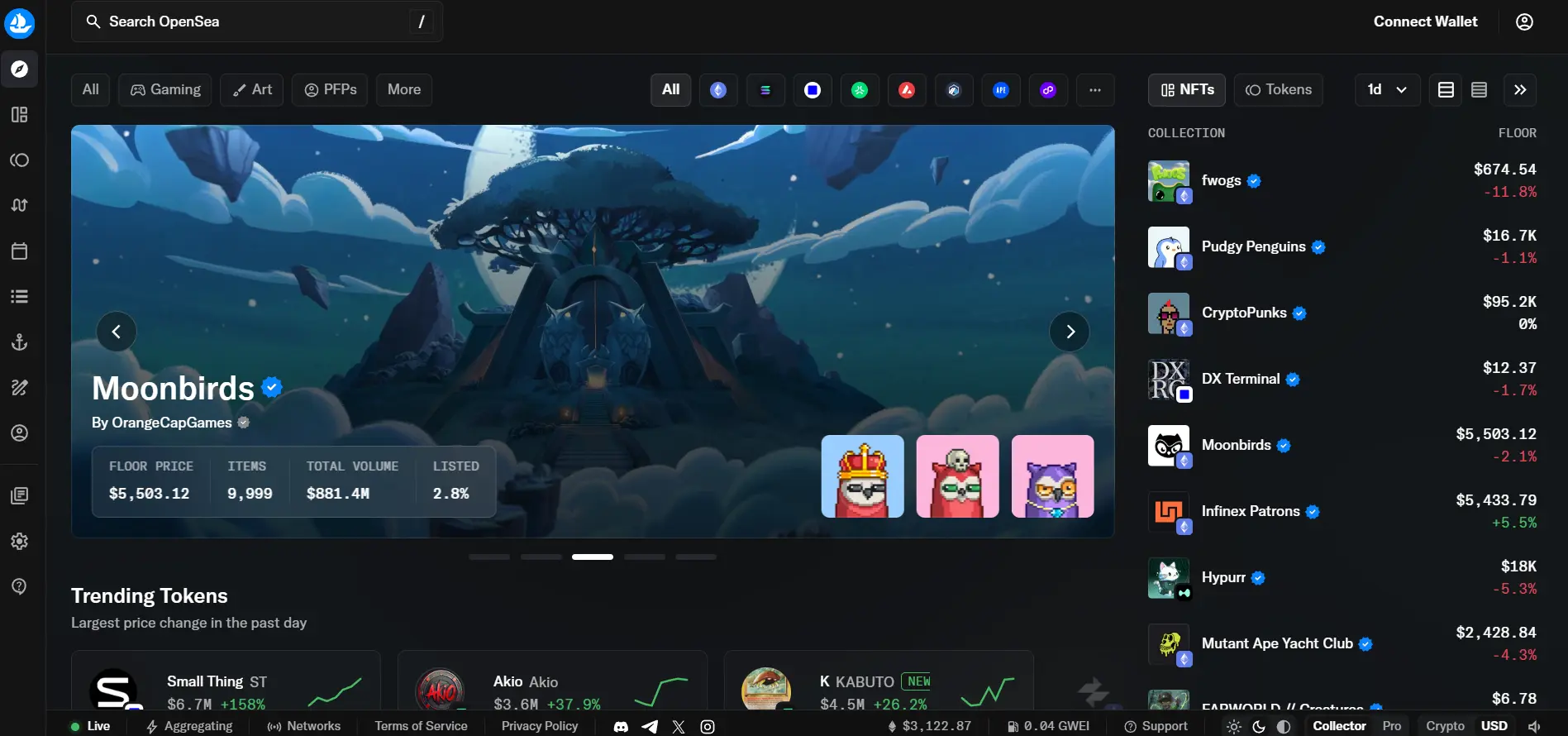
OpenSea was established in 2017 as a decentralised application to connect users to the Blockchain. OpenSea NFT marketplace allows trades to happen through smart contracts without any authority having possession of its users’ items. It is one of the largest NFT marketplaces in the world, offering highly versatile collections to cater to a wide range of hobbyists and media enthusiasts, along with a gas-free cross-chain NFT marketplace on various blockchains.
Unique Point: The “OS2” unification architecture is designed to be a “one-stop shop for everything on-chain”, and it integrates both fungible token and non-fungible token (NFT) trading. Nearly 19 chains operate under a single operational layer.
Supported chains: Ethereum, Polygon, Avalanche, Arbitrum, and more
Key Features:
- Gas-free Marketplace
- Lazy Minting
- Small Fees, Excellent Royalties
- Secure NFT Cross Chain Bridge
Potential Drawback:
- Overcrowded cross-chain NFT marketplace
- High fees
- Limited customer service
2. Magic Eden
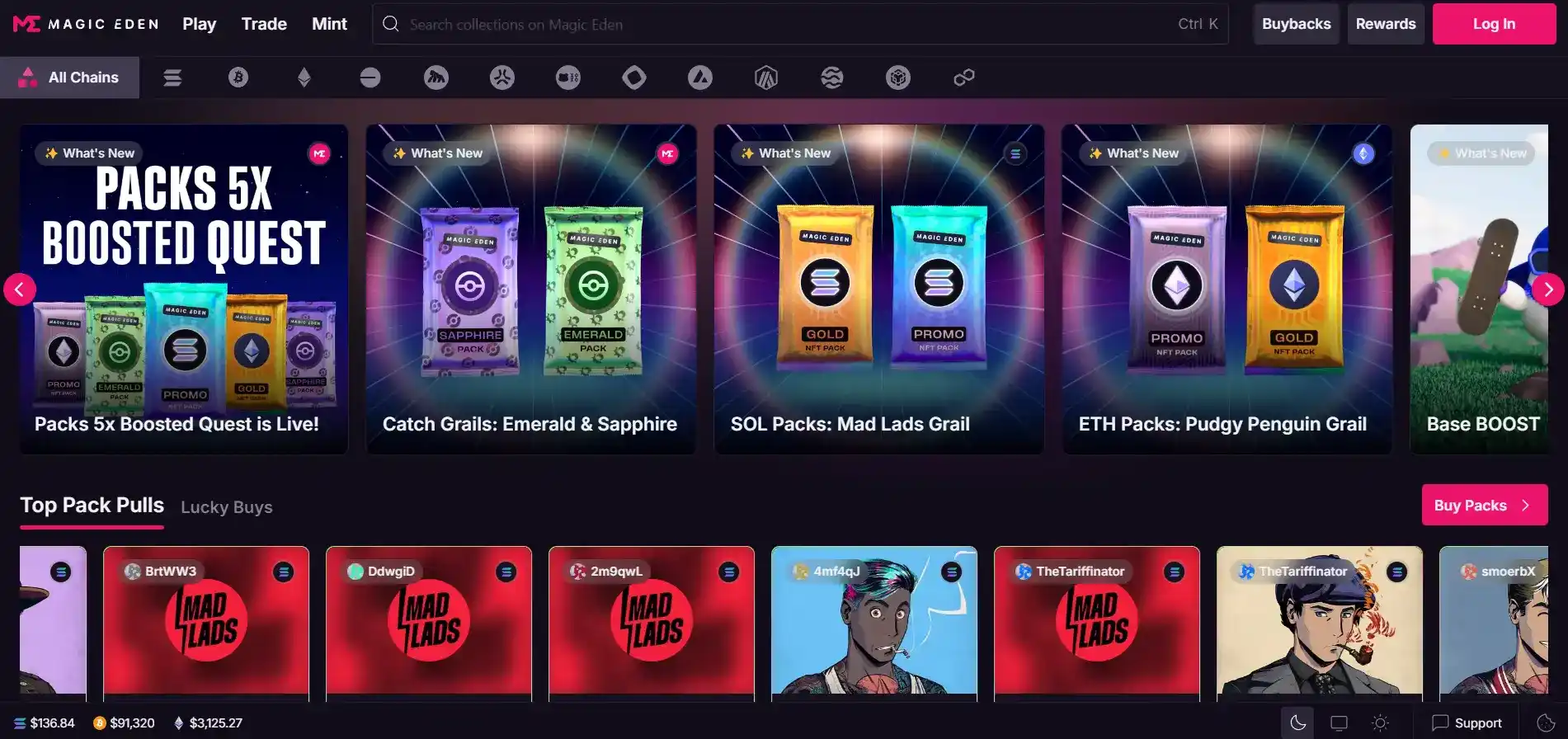
Magic Eden is a cross-chain NFT marketplace, launched in 2021, that gained extreme popularity owing to its support for superior-quality NFT collections. Initially, it was developed for Solana, but it quickly expanded to other blockchains, including Ethereum and Polygon. Today, this cross chain NFT bridge is one of the major marketplaces in crypto art and digital collectibles, featuring a strong community focus, a user-centric interface, and a launchpad for novel NFT projects.
Unique Point: Deep gaming integrations, including launchpads, phygital (physical + digital) assets, and SPL token support.
Supported chains: Solana, Bitcoin, Ethereum, Base, Polygon, BNB Chain, and more
Key Features:
- Launchpad tool for NFT creators
- DAO integration and its own Magic Ticket. NFT
- NFT Mint Terminal
- Magic Eden Non-Custodial Wallet
Potential Drawback:
- Limited chain support on the wallet app
- Primarily focuses on the Solana NFT marketplace
3. OKX NFT Marketplace
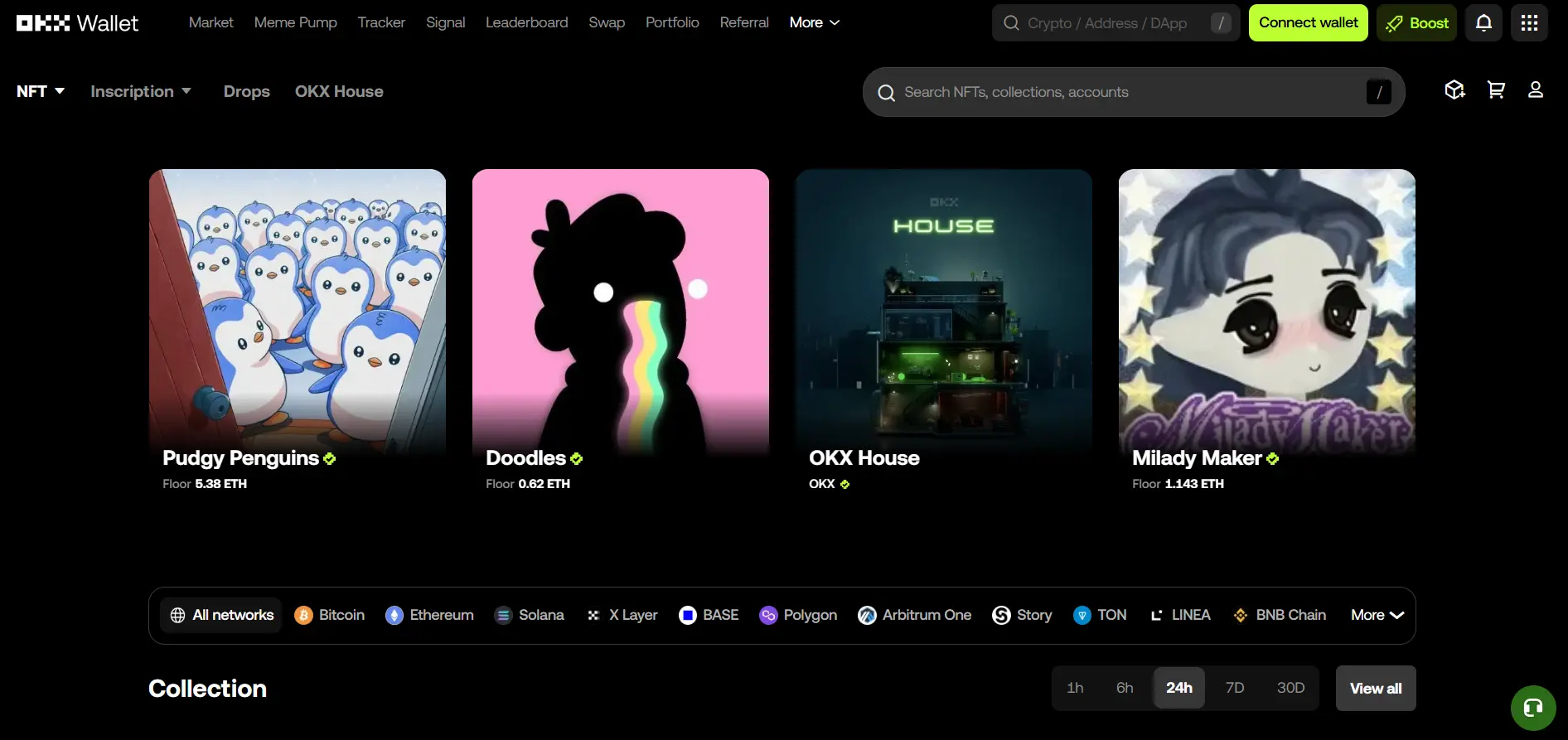
OKX is a multifunctional platform that was originally launched as a crypto exchange in 2017 but later integrated a cross chain NFT marketplace for users to explore, mint, buy, and sell NFTs across various blockchains. The OKX NFT marketplace allows interaction with tokens on chains like Ethereum, Solana, BNB Chain, Bitcoin, and others, and features a set of innovative tools designed to improve the experience on the platform. The OKX NFT marketplace cross-chain compatibility is something worth mentioning, as it streamlines the NFT management process as seamlessly and intuitively as possible for collectors and creators alike.
Unique Point: Aggregates listings from numerous chains and major NFT marketplaces into one trading interface with CEX-grade liquidity
Supported chains: 130+ native chains, including Ethereum, Bitcoin, BNB Chain, Solana, Ripple, Arbitrum, and more.
Key Features:
- Top NFT collections
- NFT Drops and Launchpad
- A detailed Stats feature
Potential Drawback:
- Mandatory KYC verification requirement
- Not beginner-friendly
4. Binance NFT
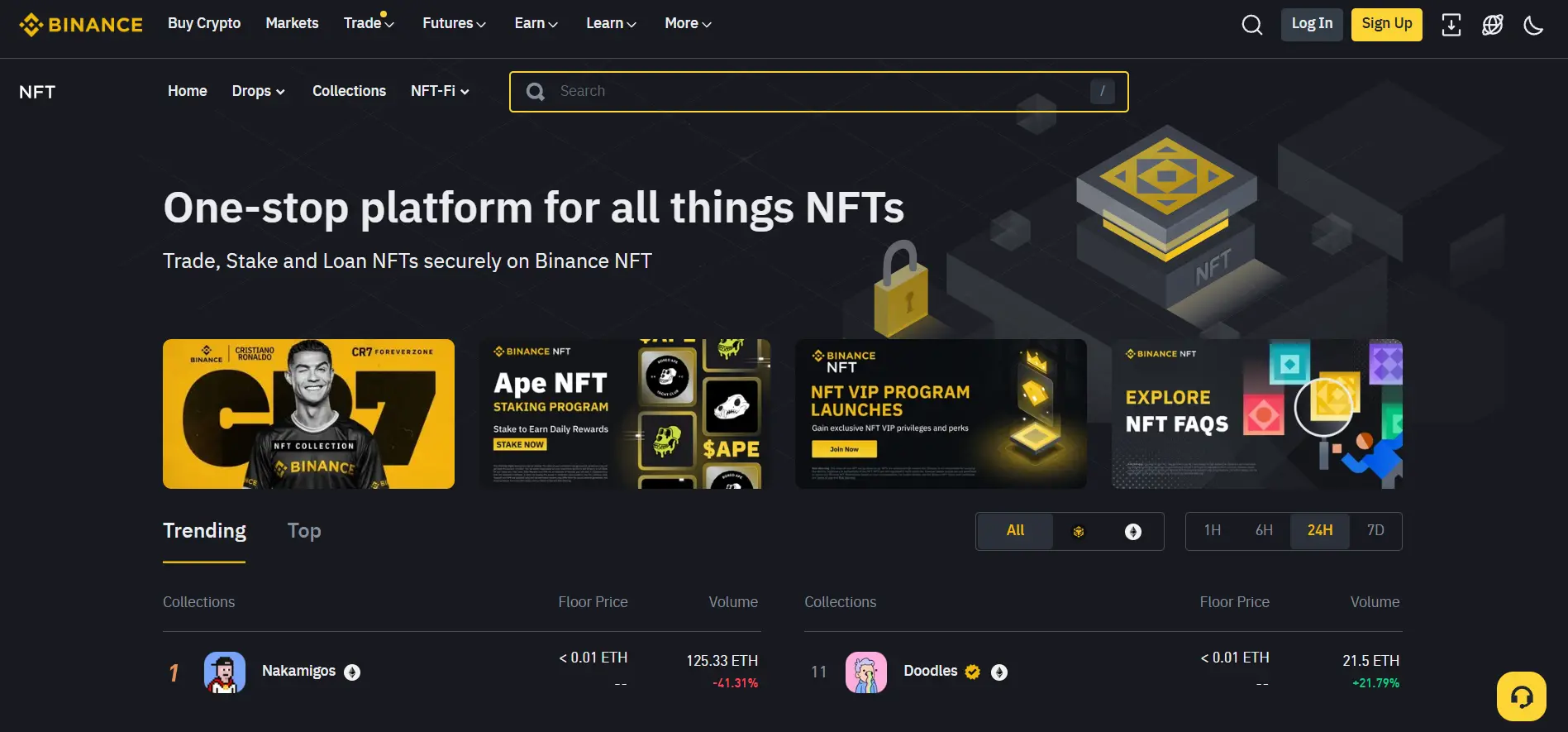
Binance NFT marketplace was created by Binance in 2021 to provide access to a wide range of NFT assets and ensure every user can engage in Web3, regardless of their knowledge or experience. Close to 40m USDT in trading volume have been generated and 100k NFTs created since this platform made its minting feature available to registered users. The key advantage of the cross chain NFT marketplace solutions on Binance NFT is the integration into the market saturation that the parent company, Binance, enjoys, making it easy for traders to test out NFT operations on the side.
Unique Point: Access to 280M+ users on Binance with low fees, custodial NFT trading
Supported chains: Ethereum, BNB Chain, Polygon
Key Features:
- Binance NFT community-driven Mini app
- Mystery Boxes and POAP (Proof of Attendance Protocol) NFTs
Potential Drawback:
- Slow responsiveness, especially during large-scale events
- Geographical limitations
5. Coinbase NFT
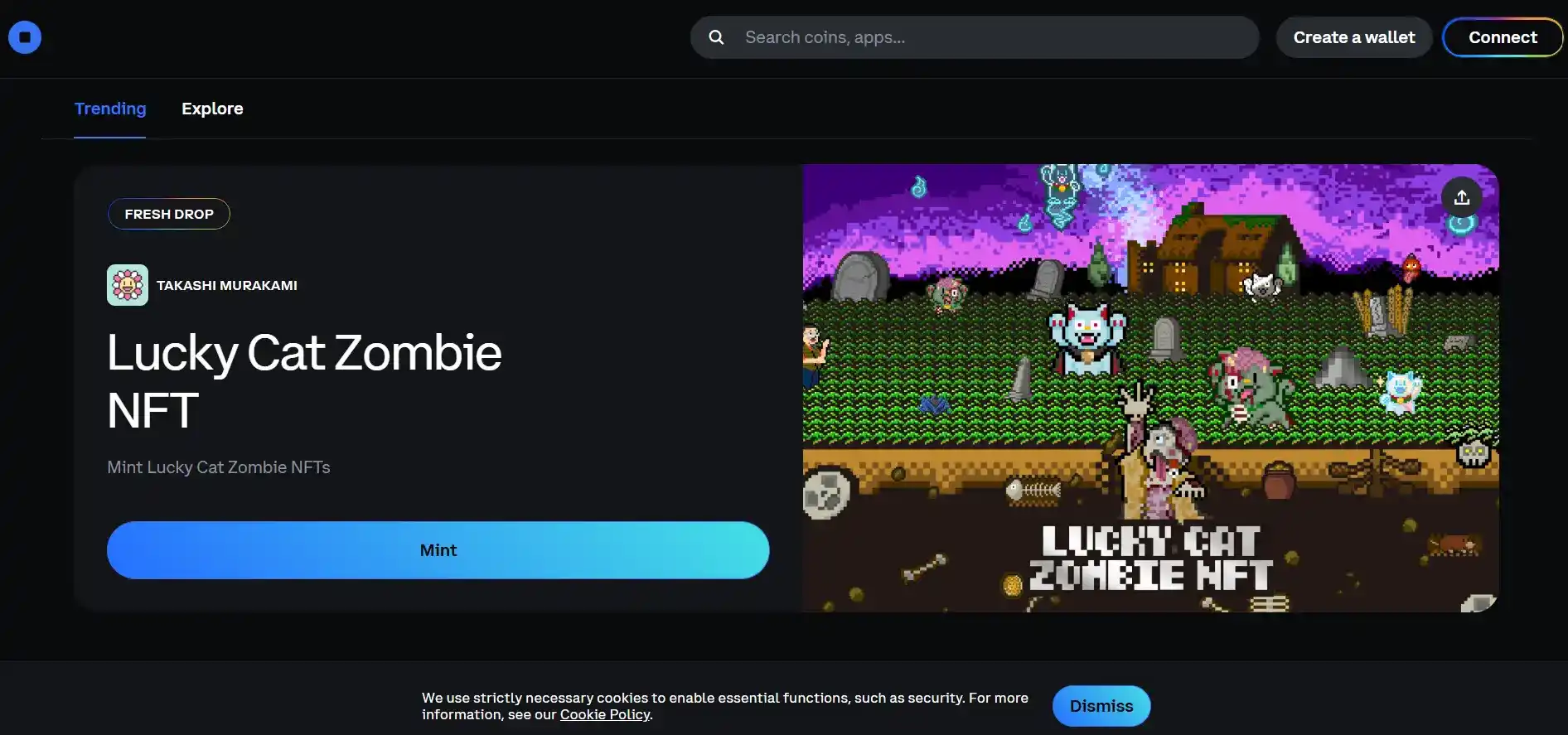
The Coinbase NFT marketplace was launched in 2022 by Coinbase, the largest crypto exchange in America, to provide the best user experiences for NFT traders and collectors and to increase the overall social engagement around the digital asset class. It has over 98 million registered users and an excellent reputation, which reflects the platform’s success in the world of NFTs. The social features benefit new and upcoming NFT creators and cater to a broad range of users, including experienced traders, casual investors, and crypto enthusiasts. The advanced platform is, however, limited, supporting only Ethereum and using ETH as the sole currency.
Unique Point: Instagram-style UI to make NFT trading feel social and human
Supported chains: Ethereum
Key Features:
- “Discover” to find like-minded NFT collectors and creators
Potential Drawback:
- High staking commission and trading fees
- Doesn’t support many blockchains
Bonus Platform: Alternate Options
1. Rarible
Rarible is a decentralized multi-chain NFT Marketplace where users can create and sell NFTs using one of the many blockchains available, including Ethereum, Polygon, and Tezos.
2. Mintable
Mintable is designed as an easy way for users to create and sell their own NFTs on a single platform. With “gasless minting” and supported credit/debit card payment methods, Mintable is a user-friendly service for individuals who want to get started right away and do not want to deal with complicated cryptocurrency processes.
3. LooksRare
LooksRare is a community-based NFT marketplace built on the Ethereum network. The marketplace primarily supports traders, offering lower than average fees (2% or less) and rewards for using their platform through token-based compensation, making LooksRare an attractive choice for those looking for a more trader-centric experience compared to traditional auction sites.
How to Select the Correct NFT Platform
- To select the best NFT marketplace, start by determining the overall reputation and security. Choose a marketplace with a proven record in the industry, open and transparent about its practices, and has security features like two-factor authentication and audited smart contracts.
- Remember to identify whether NFTs will be on Ethereum, Solana, or Polygon, or any other blockchains that you will utilize for your NFTs, and the token standard they support (ERC-721 or ERC-1155).
- Check the marketplace fees for listing or minting. This includes the marketplace’s service fee/commission fees to the seller, as well as any gas or network fees charged. Lower and more transparent fees will help protect profits as an artist.
- The marketplace should have liquidity and volume, and should have a large and active user base. This means the greater the number of active sellers and users, the more likely you are to sell your NFTs, reach buyers, and complete your trades.
- Lastly, consider user experience, including supported wallets, an intuitive interface, and how well the platform simplifies the NFT listing and minting processes.
Also read: Top 5 Crypto Exchanges with Built-in NFT Marketplaces
Can I Trade Both NFTs and Tokens on the Same Platform?
If you’re looking to manage both fungible tokens (like ETH, SOL, or BNB) and NFTs without switching platforms, two marketplaces stand out in 2026: OKX NFT and OpenSea.
OKX NFT Marketplace operates as a unified trading hub aggregating NFT listings from 130+ blockchains alongside token trading with CEX-grade liquidity. Users can buy, sell, and swap tokens across chains in the same session they manage NFT collections — without leaving the platform. This makes OKX the strongest choice for traders who work across both asset classes.
OpenSea’s OS2 architecture was designed specifically as a “one-stop shop for everything on-chain,” integrating both fungible token and NFT trading under a single operational layer spanning nearly 19 chains. Collectors who previously had to move between OpenSea and a DEX can now handle both within the platform.
Binance NFT offers indirect token access through its parent exchange — users holding tokens on Binance can move fluidly between the NFT marketplace and spot trading.
For pure NFT-only collectors who don’t need token trading, Magic Eden and Coinbase NFT remain the most streamlined options with fewer distractions.
Conclusion
Cross-chain NFT marketplaces such as OpenSea, Magic Eden, OKX, Binance, and Coinbase have changed how NFT marketplace models allow interaction between artists and collectors. These marketplaces now support many popular chains or networks, such as Ethereum, Solana, and BNB Chain, providing users with access to many new potential buyers while also allowing greater liquidity. This means now creators can market their artwork in front of a larger audience than ever before. What’s more is that creators no longer have to pay the same high gas fees associated with Ethereum while making their NFTs available for purchase on different blockchains.
FAQ
Q: What is the best cross-chain NFT marketplace in 2026?
OKX leads for chain coverage (130+ chains). OpenSea leads for collection volume and liquidity. Magic Eden is best for Solana and low fees.
Q: Which NFT marketplaces support both Ethereum and Solana?
Magic Eden, OKX NFT Marketplace, and OpenSea. Magic Eden has the strongest dual-chain performance.
Q: How does OpenSea compare to Magic Eden for cross-chain trading?
OpenSea wins on collection breadth and Ethereum coverage. Magic Eden wins on fees, speed, and Solana-native features.
Q: Which cross-chain NFT marketplace has the lowest fees?
Magic Eden (Solana-based transactions), OpenSea (gas-free lazy minting), and OKX (aggregated competitive fees).
Q: Can I trade both NFTs and tokens on the same platform?
Yes — OKX NFT and OpenSea OS2 both support fungible token + NFT trading in one interface.
Q: What makes OKX NFT Marketplace different from others?
130+ chain support, aggregated listings from major marketplaces, and CEX-grade liquidity in a single interface.
Q: Which NFT marketplace requires KYC verification?
OKX and Binance NFT require mandatory KYC. OpenSea, Magic Eden, and Coinbase NFT allow wallet-only access.