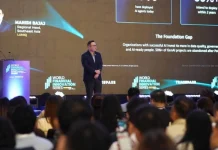
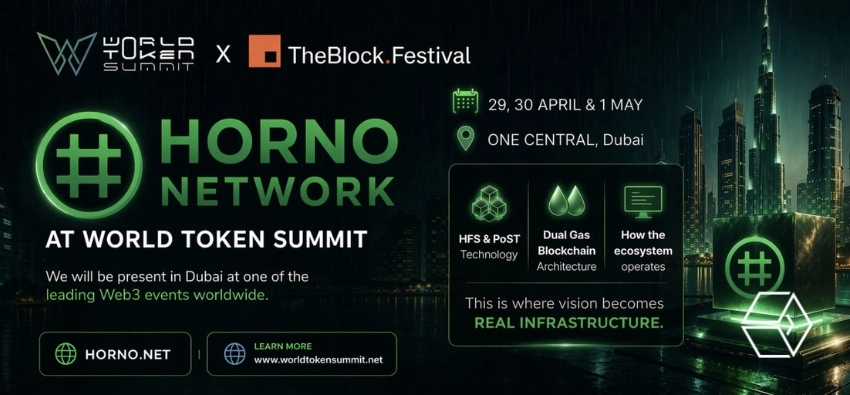
During the World Token Summit 2026 and TheBlock Festival week in Dubai, HORNO Network hosted its official Community Seminar at Dark Door Specialty Coffee, located inside One Central Dubai — Office 4 Building.
The event welcomed blockchain enthusiasts, developers, Web3 entrepreneurs, infrastructure specialists, technology professionals, early adopters, and community leaders interested in understanding the future of decentralized infrastructure and participation-based blockchain ecosystems.
Unlike traditional blockchain events focused primarily on speculation, token trading, or short-term narratives, the HORNO Community Seminar was structured as a highly educational and interactive experience designed to explain the technological, infrastructural, and social evolution of decentralized systems.
The seminar explored how blockchain infrastructure progressively shifted from open public participation toward highly centralized industrial operations controlled by large datacenters and institutional actors.
According to the HORNO team, one of the biggest challenges in the blockchain industry today is that participation barriers have increased dramatically over time due to:
- Expensive hardware requirements
- Technical complexity
- Industrial-scale mining infrastructures
- Infrastructure concentration
- High operational costs
- Datacenter dependency
The seminar introduced HORNO’s vision of restoring participation accessibility through a Proof-of-Storage Community Blockchain model powered by existing user-owned devices.
During the presentation, the HORNO team demonstrated how unused storage capacity from:
- PCs
- Laptops
- External HDDs and SSDs
- NAS systems
- Smartphones
- RAID storage systems
can become part of a distributed infrastructure ecosystem without requiring users to purchase specialized mining equipment.
A major focus of the event was sustainability.
HORNO explained that the infrastructure model does not aim to create massive new hardware demand, but instead activates dormant storage resources that already exist globally.
The team highlighted that billions of gigabytes worldwide remain unused every day while traditional infrastructure expansion continuously increases energy consumption and electronic waste.
By utilizing already-existing devices, HORNO aims to reduce:
- Additional hardware manufacturing
- Datacenter expansion dependency
- Electronic waste generation
- Unnecessary infrastructure duplication
- Additional CO₂ impact associated with new hardware production
Throughout the seminar, attendees participated in:
- Educational sessions
- Live demonstrations
- Open Q&A discussions
- Community-building conversations
- Infrastructure scaling discussions
- Wallet and dashboard walkthroughs
The event also introduced the HORNO Pioneer Phase, an early participation initiative designed to allow initial community members to position themselves before wider ecosystem expansion.
Participants learned about:
- Infrastructure contribution systems
- Community-driven scaling
- Storage participation logic
- Activity-based ecosystem growth
- Decentralized infrastructure economics
- Real utility participation models
One of the central themes of the seminar was accessibility.
The HORNO team repeatedly emphasized that users do not need:
- Advanced technical knowledge
- Expensive ASIC miners
- Datacenter ownership
- Blockchain programming expertise
- Large-scale investments
Instead, the ecosystem was presented as a participation-based infrastructure model where everyday users can contribute through devices they already own.
The atmosphere at Dark Door Specialty Coffee created a highly interactive and community-oriented environment where attendees could directly engage with developers, ask questions, explore demonstrations, and discuss infrastructure concepts in a practical and accessible way.
The final portion of the seminar included a live hands-on demonstration where participants explored:
- Dashboard navigation
- Device activation flows
- Storage allocation systems
- Wallet structures
- Community onboarding tools
- Infrastructure visualization systems
The seminar concluded with networking activities between attendees, strategic partners, developers, investors, community leaders, and ecosystem supporters participating in the World Token Summit Dubai week.
According to HORNO Network, this seminar represents the beginning of a broader international educational initiative focused on bringing decentralized infrastructure concepts to mainstream audiences through practical education, accessibility, and community participation.
FULL EDUCATIONAL CONTENT
15:00 — BLOCK 1
FOUNDATION & TECHNOLOGY
25 MINUTES
TOPIC:
HORNO — BACK TO PARTICIPATION
MAIN OBJECTIVE:
Explain how blockchain evolved from open participation systems into increasingly centralized infrastructure models and how decentralized storage participation can help restore accessibility.
EDUCATIONAL CONTENT:
- History of decentralization
- Peer-to-peer systems
- Community mining era
- Open participation philosophy
- Distributed verification systems
- Industrial mining farms
- Hardware monopolization
- Datacenter dependency
- Participation barriers
- Infrastructure concentration
- Existing devices becoming infrastructure nodes
- Accessible participation systems
- Community-powered infrastructure
- Real utility participation
KEY MESSAGE:
Decentralization should remain accessible to ordinary people, not only institutions.
15:25 — INTERACTIVE Q&A
15 MINUTES
OBJECTIVE:
Clarify misconceptions and answer technical and conceptual questions.
DISCUSSION TOPICS:
- Difference between mining and storage contribution
- Privacy and security systems
- Infrastructure verification
- Distributed storage logic
- Zero-knowledge concepts
- Community participation models
- Accessibility of decentralized infrastructure
- Real utility ecosystems
KEY MESSAGE:
Decentralized infrastructure can become understandable and accessible to mainstream users.
15:40 — CONTEXT & TRANSITION
20 MINUTES
TOPIC:
FROM PEOPLE TO INSTITUTIONS
OBJECTIVE:
Explain how blockchain infrastructure shifted toward centralized industrial ownership.
EDUCATIONAL CONTENT:
- Industrialization of blockchain
- Datacenter scaling
- Specialized hardware dependency
- Rising operational costs
- Hardware barriers
- Loss of independent participation
- Institutional infrastructure dominance
- Transition toward distributed participation models
- Utility-driven ecosystems
- Existing resource activation
- Community-powered infrastructure growth
KEY MESSAGE:
The next generation of blockchain infrastructure must lower participation barriers.
16:00 — VIDEO PROJECTION
5 MINUTES
TOPIC:
PIONEER PHASE INTRODUCTION
VIDEO CONTENT:
- HORNO global infrastructure vision
- Community-powered ecosystem concepts
- Global participation simulations
- Distributed node expansion
- Infrastructure growth projections
- Early network development
- Long-term ecosystem vision
KEY MESSAGE:
The first participants help shape the future structure of the ecosystem.
16:05 — PIONEER PHASE & POSITIONING
25 MINUTES
OBJECTIVE:
Explain the strategic logic behind early infrastructure participation.
EDUCATIONAL CONTENT:
PIONEER PHASE
- Early positioning
- Network formation
- Infrastructure expansion
- Community growth
PLANS & STRUCTURE
- Device activation
- Storage allocation
- Participation systems
- Infrastructure contribution
NETWORK MODEL
- Community growth logic
- Activity-based expansion
- Referral structures
- Ecosystem participation
VALUE GENERATION
- Software licensing
- Infrastructure usage
- Enterprise demand
- Advertising-supported systems
- Ecosystem economics
KEY MESSAGE:
Real ecosystems grow through active participation and infrastructure contribution.
16:30 — HOW TO BUILD YOUR COMMUNITY
15 MINUTES
OBJECTIVE:
Teach sustainable and ethical community-building methodologies.
EDUCATIONAL CONTENT:
- Education-first onboarding
- Leadership principles
- Ethical communication
- Community support systems
- Long-term ecosystem development
- Community retention strategies
- Helping users understand infrastructure
- Creating active ecosystems through education
KEY MESSAGE:
Strong communities are built through education, transparency, and support.
16:45 — STRATEGY & SCALING
20 MINUTES
OBJECTIVE:
Explain infrastructure scaling mechanics.
EDUCATIONAL CONTENT:
- Infrastructure growth models
- Device contribution systems
- Stable uptime importance
- Active participation ecosystems
- Infrastructure reliability
- Community-driven scaling
- Real usage expansion
- Ecosystem sustainability
SCALING FLOW:
- Register
- Activate device
- Allocate storage
- Enter Pioneer Phase
- Invite community
- Drive activity
- Scale infrastructure
KEY MESSAGE:
Infrastructure growth depends on real participation and stable ecosystems.
17:15 — LIVE HANDS-ON EXPERIENCE
10 MINUTES
OBJECTIVE:
Provide direct practical interaction with the ecosystem.
LIVE DEMONSTRATION:
- Dashboard navigation
- Wallet overview
- Device activation
- Storage allocation
- Ecosystem interface exploration
- Community onboarding systems
KEY MESSAGE:
The ecosystem is designed to be practical, accessible, and user-friendly.
17:25 — FINAL MESSAGE
5 MINUTES
CORE MESSAGE:
This is not about speculation.
This is about infrastructure participation.
KEY THEMES:
- Community-driven infrastructure
- Accessible participation
- Sustainable infrastructure
- Real utility contribution
- Decentralized accessibility
- Long-term ecosystem growth
FINAL MESSAGE:
The future of decentralized infrastructure may not be built only by massive datacenters.
It may be built by millions of people contributing resources they already own.
17:30 — CLOSE & NETWORKING
ACTIVITIES:
- Community introductions
- Technical discussions
- Strategic networking
- Ecosystem conversations
- Investor interaction
- Partnership discussions
- Team Q&A
More about HORNO Network on HORNO.net
More about World Token Summit 3.0 X TheBlock. Festival on worldtokensummit.net