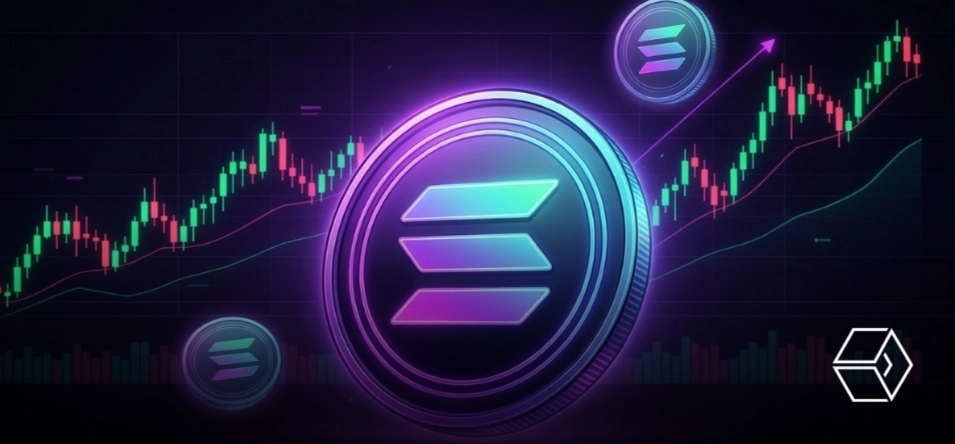
Solana is promoting an approach that keeps users and applications within the same blockchain network, arguing that a more unified environment could make it easier to move between services and encourage continued activity.
The idea comes as Solana expands its ecosystem across decentralized finance, payments, stablecoins, and tokenized assets. The network has recorded activity across those areas, but the latest message is a strategy rather than evidence that user engagement has increased because of it.
Solana’s post focuses on the potential benefits of having applications operate within one network, while the discussion around the strategy comes as blockchain networks compete for users, developers, and applications. The question is whether keeping more activity on one network can translate into sustained use of applications, rather than simply increasing transaction counts or trading volumes.
Solana Points to RWAs and Payments Growth
Solana’s latest message centers on the idea of bringing different applications and activities together within one network. In its post on X, the network highlights an environment where users can interact with different services and assets without having to move between separate blockchain networks.
HTTPS://T.CO/XHID1LNWYH PIC.TWITTER.COM/9ULGUPQCOO
— Solana (@solana) AUGUST 31, 2026
The concept is relatively straightforward. If applications operate on the same blockchain, users can potentially move between services while using the same underlying network infrastructure. Developers can also build applications that interact with other services, wallets, and assets within that environment. That approach fits with how Solana has been expanding its ecosystem.
The network’s recent activity has extended beyond decentralized finance and trading into payments, stablecoins and tokenized financial assets. In its July ecosystem report, the Solana Foundation said real-world asset value on the network reached $3.73 billion by the end of the month, while the number of addresses holding tokenized real-world assets passed 313,000.
The network also increased its maximum block capacity in July, raising the limit from 60 million to 100 million compute units per block. The change was presented as an infrastructure upgrade intended to give the network additional capacity as activity develops.
However, those developments do not by themselves show that the all-in-one approach is increasing user engagement. Transaction activity, asset values, and application usage measure different aspects of a blockchain network. That distinction is important because the original Coinfomania report frames the strategy around boosting engagement, but the underlying announcement is Solana’s own argument about how a unified network could encourage activity.
Activity Is Growing, But Engagement Remains Harder To Measure
Independent data provides some evidence of substantial activity on Solana, although it also shows why measuring user engagement requires more than looking at transaction totals. WalletConnect reported that $3.82 billion in value moved across Solana through its network during the first half of 2026. The activity covered 492,097 transactions, 22,428 distinct users and 766 applications across 200 countries, with DeFi the largest category by value. Note that the user figure is small relative to the value moved.
The same data also showed that activity was concentrated among a relatively small number of applications. Kamino and Jupiter accounted for about 70% of the value recorded through WalletConnect’s Solana activity during the period. That does not necessarily indicate a problem, but it shows that headline network figures can conceal differences in how activity is distributed across applications.
Other data points show Solana attracting activity in areas beyond trading. The Solana Foundation reported that payments expanded in July, including a planned integration of Solana Pay across a Korean merchant network with more than 330,000 locations. The network also reported new tokenized equity products and additional stablecoin payment services during the month.
Community discussions provide another, though less formal, view of the user experience. On Reddit, Solana users have discussed ways to make decentralized applications easier to access and navigate, with some focusing on the potential benefits of bringing services into a simpler interface while others raise concerns about security and how users assess different applications.
Those discussions are anecdotal and cannot be used to measure the wider user base. They do, however, point to the practical issue behind Solana’s latest message, which is that being on the same network does not automatically make applications easier to use.
For Solana, the longer-term test will be whether activity across its network translates into sustained use of individual applications and services. Transaction volume and asset values can show that a network is being used, but they do not by themselves establish how many people are returning regularly or whether the network’s broader ecosystem is becoming easier for users to navigate.
You may also like to read – Solana Lifts Block Limit to 100M CUs for Higher Throughput