Key highlights:
- MAS has issued S$100 million in tokenised bills using distributed ledger technology, taking a big step toward the direct digital issuance of financial instruments.
- By issuing these bills natively on the Singapore Dollar Test Network, MAS avoids the need for post-issuance tokenisation and cuts out the reconciliation process.
- This new transaction sets the path for using tokenised MAS Bills in lending and collateral management.
- MAS plans to grow this initiative in 2027 by bringing in more financial institutions and expanding how tokenised securities are used.
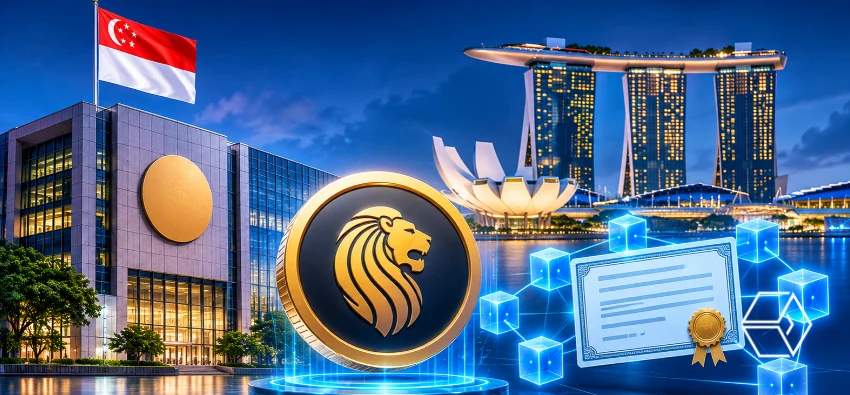
The Monetary Authority of Singapore (MAS) took another step toward building digital financial infrastructure, successfully issuing S$100 million in tokenised MAS Bills. MAS announced the achievement on 19 November 2026, after carrying out the transaction on 6 November 2026. This involved four-week MAS Bills issued straight through the MAS-run Singapore Dollar Test Network. The securities were settled using wholesale Central Bank Digital Currency (CBDC), so both issuance and payment happened within the same network.
This move builds on earlier efforts where MAS used wholesale CBDC for interbank transactions. Now, MAS is moving a well-known Singapore dollar instrument onto distributed ledger technology. The project also fits into MAS’s broader push to see how tokenised securities can blend into day-to-day financial market activities. With these Bills set to mature on 4 December 2026, MAS now has a real-world setting to test how these digital instruments work after they are issued.
Native Issuance of MAS Bills Marks Progress in Digital Financial Infrastructure
A key feature of this move is the way MAS created and issued the securities. Instead of issuing the Bills in the normal way and converting them into tokens later, MAS issued the bills natively, meaning, right from the start, on the Singapore Dollar Test Network. So from the beginning, the securities were digital, removing the need for any separate tokenisation later on.
This direct approach cuts out the reconciliation usually needed when a traditional security is later turned into a token. It also avoids having intermediaries involved. MAS got to test issuing a widely-used financial instrument directly using distributed ledger technology.
Settling these tokenised Bills also happened with wholesale CBDC, which covered the payment side of things. This setup gave MAS a way to see how tokenised securities and digital central bank money can work together inside the same system.
Five Primary Dealers took part in the auction, with bids totaling over twice the S$100 million offered. This shows strong demand for the tokenised bills. The securities run for four weeks and will mature on 4 December 2026.
This trial follows a live interbank overnight lending transaction settled with wholesale CBDC in 2025. That earlier experiment focused on bank-to-bank lending, while this latest step brought in an established Singapore dollar asset, a key financial instrument, now available in tokenised form. Both exercises help MAS test out different uses of its digital financial infrastructure.
Also read: DBS and Circle Expand Institutional Access to USDC in Asia
Next Phase to Focus on Wider Participation and Collateral Management
MAS isn’t stopping with this issuance. Now, the authority is exploring how tokenised MAS Bills might be used in other financial activities. One area getting attention is secured lending, where banks or other institutions use assets as collateral. By having tokenised MAS Bills available on the test network, it gets easier to try them out in these scenarios.
Collateral management is also part of MAS’s next phase. Plans include issuing more tokenised MAS Bills, inviting more financial institutions into the network, and testing the use of these digital bills in more types of financial activities. The goal is to see how tokenised securities might help improve the way the broader financial markets operate and possibly make settlements more efficient.
MAS is also focused on improving how these tokenised bills work and making them more liquid so they can be bought and sold easily as more people become comfortable using them. The aim isn’t to replace traditional MAS Bills, but rather to let tokenised ones work alongside them.
MAS Managing Director Chia Der Jiun said this live issuance gave MAS a real test of a new digital method, and a chance to keep improving the authority’s own distributed ledger tech. He said continuing to build up the function and liquidity of these tokenised bills is important as the market gets used to them.
MAS is welcoming financial institutions and infrastructure service providers who want to join the next phase of trials in 2027. This upcoming round will build on what happened in November 2026, aiming to see how tokenised MAS Bills can be used across even more types of financial activities.