Key Highlights
- Solflare has introduced Private Mode, powered by Helius, allowing users to hide token holdings, balances, and payment amounts without creating a separate wallet.
- Zero-knowledge proofs allow Solana to verify private payments without revealing the transferred asset or amount, while sender and recipient addresses remain visible.
- The feature supports private transfers between users who have enabled Private Mode, although deposits, withdrawals, and other wallet activities remain publicly visible.
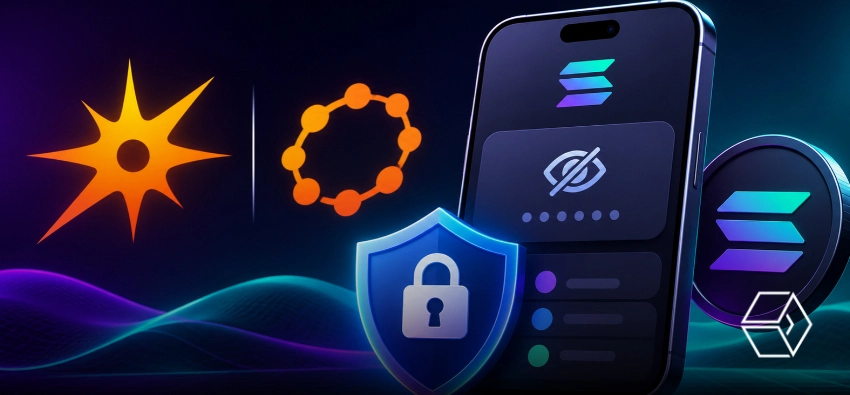
Solflare has released Private Mode on Solana, introducing an option for users to keep their cryptocurrency holdings and payment details hidden from public view. Powered by Helius, the feature adds a private balance to users’ existing Solflare wallets rather than needing them to create another wallet or manage a separate address.
It is designed to address one of the limitations of public blockchains, where wallet balances and transaction histories can be inspected by anyone. While the new feature conceals the assets and amounts involved in private payments, it does not hide the identities of the wallets participating in those transactions.
How Does Solflare’s Private Mode Work on Solana?
Solflare’s Private Mode uses zero-knowledge proofs to allow transactions to be verified without publicly revealing the token being transferred or its amount. Under the arrangement, users can maintain private token balances within their existing wallets, while transactions between other Private Mode users conceal the financial details from public blockchain observers. As per Solflare’s technical explanation, Private Mode creates a separate private balance alongside the user’s existing public balance.
The private balance is derived from the user’s existing Solana key, so there is no need to create or manage another wallet address. The assets remain on Solana as encrypted records that can be accessed using the user’s keys.
Solflare says it does not hold the keys to these private balances. The technology relies on zero-knowledge proofs, which allow the blockchain to confirm that a transaction follows the network’s rules without disclosing the underlying information.
For example, the proof can demonstrate that the sender owns the funds, that the transaction does not create money from nothing, and that the same funds are not being spent twice. Solana verifies the proof while the token and transfer amount remain encrypted. Helius identifies its privacy protocol, providing service and indexer as the infrastructure behind the feature, while Solflare provides the wallet interface.
The feature does not make transactions completely anonymous. Sender and recipient addresses remain visible on-chain, meaning observers can still identify which wallets interacted and when a transfer took place. However, they cannot directly see the token or amount involved in a private payment.
What Does the Launch Mean for Privacy on Solana?
The launch comes as privacy becomes a growing area of development across the Solana ecosystem. Although public blockchains allow users to transact without revealing their real-world identities directly, wallet addresses can expose considerable financial information.
Anyone who knows an address can inspect its token holdings, transaction history, and transfers. Helius introduced Solana Privacy Rings on mainnet on November 10, creating infrastructure for confidential payments and other privacy-focused applications.
The permissionless version encrypts assets and amounts while keeping wallet addresses visible. It also allows users to deposit assets into private balances, make confidential transfers, and withdraw funds to public balances. Helius says the system supports SOL, SPL, and Token-2022 tokens, with transactions executed directly on Solana rather than through a separate network or bridge.
However, Solflare’s current Private Mode has limitations. Private balances cannot yet be used directly for swaps, staking, Earn, or decentralized applications. Users must first move funds back to their public balance, making that movement visible.
Each movement also requires SOL in the public balance to cover network fees. There are also privacy considerations beyond what public blockchain explorers can see; Solflare says its servers can observe when wallets synchronize and which transactions they send.
The company can also infer the token and amount of transfers sent through Solflare from the privacy fee collected on those transactions. This means Private Mode conceals financial details from public blockchain observers but does not provide complete anonymity from every service involved in processing activity.
Solflare’s launch adds a consumer-facing privacy feature to Solana’s expanding privacy infrastructure. Its adoption will depend on how users respond to the balance protection it offers, as well as whether future integrations extend private balances to more wallet and DeFi activities.