
- Circle denies claims of a tokenized gold and silver swap platform launch.
- No on-chain proof exists for GLDC, SILC, or CIRM tokens tied to the false release.
- The scam site urged wallet connections, raising security concerns for users.
A Christmas Eve press release that claimed Circle had launched a new tokenized metals trading platform was fabricated, according to a spokesperson who confirmed to CoinDesk that the announcement was entirely false.
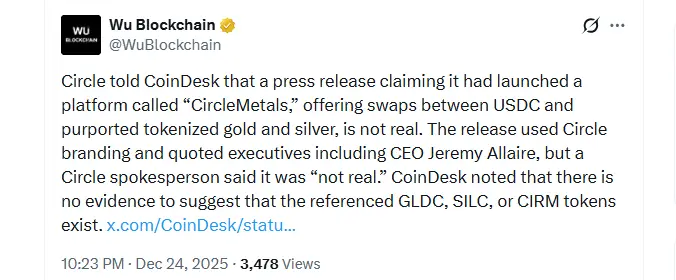
Circle Denies Tokenized Swaps (Source: X)
The misleading release promoted a service called CircleMetals, which allegedly offered 24/7 swaps between USDC and tokens representing gold (GLDC) and silver (SILC). The claims quickly circulated across crypto channels before being dismissed by the company.
A Fabricated Launch That Mimicked Official Branding
The fraudulent release was distributed on December 24, a period when many U.S. companies operate with limited staff, creating slower response times that attackers frequently exploit. The document reproduced Circle branding and even included manufactured quotes attributed to executives such as CEO Jeremy Allaire.
According to the spokesperson, none of the statements, products, or platforms referenced in the release were real. The announcement directed users to a website prompting wallet connections in exchange for supposed “1.25% in $CIRM rewards.”
CoinDesk noted that no token called CIRM exists on major data trackers, nor do GLDC or SILC appear in any verified listings. Despite Circle’s confirmation that the release was fraudulent, the linked website remained live at the time of reporting.
No On-Chain Evidence of Tokenized Metals or Liquidity
Independent blockchain searches revealed no token contracts for GLDC, SILC, or CIRM, contrary to the press release’s claims of COMEX-linked liquidity and seamless swaps. Legitimate tokenized commodities, especially those tied to regulated metals markets, typically require verifiable custodianship, regulatory documentation, and transparent smart-contract deployment. Yet, none of those components were present.
Moreover, Circle’s official communication channels, including its newsroom and corporate social profiles, made no mention of a tokenized metals initiative. Industry analysts noted that the absence of on-chain deployment and the lack of disclosure are immediate indicators that the offering was never legitimate.
ChainWire, the PR syndication platform that carried the initial release, declined to comment when approached, leaving unanswered questions about how the fabricated announcement passed through the distribution process.
How the False Announcement Spread Across Crypto Media
The release’s structure closely resembled authentic corporate communications, enabling it to circulate rapidly among smaller crypto news feeds and automated aggregation systems. Because many market participants rely on syndicated alerts for rapid reporting, fabricated announcements can gain early traction before they are verified.
This pattern is especially common during holiday periods, when oversight is lower and malicious actors attempt to exploit reduced scrutiny. Security analysts said the wallet-connection prompt embedded in the website is a well-known tactic used in crypto phishing campaigns. By encouraging users to connect their wallets to an unverified interface, scammers can trigger malicious smart contract approvals, enabling attackers to drain user assets.
Despite widespread circulation, there has been no evidence of a functional swap mechanism, no record of trading activity, and no indication that any financial institution was involved in the supposed metals-backed token system.
Industry Warning: Verify Before Engaging
The incident adds to a growing list of spoofed announcements that leverage recognizable brands such as Circle to mislead users. Industry observers warn that the speed of crypto information flow, combined with the technical complexity of token systems, creates an environment where fraudulent claims can appear credible at first glance.
However, Circle’s quick denial underscores the need for users, reporters, and investors to verify product launches directly through the company’s own channels rather than relying on third-party PR wires. Analysts say improperly vetted announcements can distort market sentiment or expose users to direct financial harm.
Security experts emphasized that users should avoid connecting crypto wallets to platforms without verified provenance. Even a single interaction with a malicious interface can authorize irreversible transactions.