
The Great Infrastructure Migration
The conversation around blockchain has evolved over the past couple of years, mainly 2020–2022, and has been filled with speculation, volatility, and retail-driven hype. The best blockchain stocks of 2026 represent a significant shift towards infrastructure, compliance, and institutional adoption.
The companies behind blockchain stocks are moving away from a focus on the token price and more toward the businesses developing the digital railways for finance, supporting custody, tokenisation, settlement layers, identity verification, and programmable payment creation. This is effectively developing the backend for the on-chain economy.
Currently, the best blockchain stocks are regarded as long-term infrastructure investments. Institutional investors are focusing less on determining which token may provide 10x returns and instead concentrating on identifying publicly traded blockchain companies to invest in that generate recurring revenues from the real-world use of blockchain.
This is part of the “Great Infrastructure Migration,” where capital is flowing out of speculative digital assets and into stocks of companies that supply digital asset infrastructure stocks through monetisation of blockchain usage on a grand scale. For investors seeking to gain durable exposure to blockchain investments, these companies offer great opportunities for long-term blockchain investments at the convergence of finance, cloud computing, AI, and decentralised networks.
What Makes a Blockchain Stock Worth Investing In?
Many of the publicly listed companies in the blockchain space aren’t offering significant opportunities to invest in those companies as a result of their revenues being tied to their blockchain activities, but rather by promoting their blockchain initiatives through marketing and PR.
Revenue Exposure vs. Hype: The best blockchain investment opportunities provide a direct recurring revenue from their blockchain-related activities, such as custody, ETF management, transaction processing, sequencing services, and tokenisation. Many companies experiment with blockchain and produce little revenue from their blockchain activities. Companies that have increasing revenues because of their on-chain adoption and usage will make the best Web3 investment stocks.
Enterprise Blockchain Adoption: Companies that have implemented distributed ledger technology into the core of their enterprise operations are the companies that will lead as the top blockchain-related stocks in 2026. The most pertinent questions that need to be asked regarding enterprise blockchain adoption are: Will blockchain reduce your operational costs? Will you include blockchain in your product roadmap? Will blockchain create new revenue streams for your company? Companies that use blockchain for intraday settlement save billions due to reduced reconciliation efforts and use those savings to invest back into their business. Companies tokenizing their funds are opening up new liquidity channels and experiencing these same durable advantages to their businesses.
Regulatory Resilience: The 2025-2026 regulatory environment has been established to provide a clearer understanding of compliance across successful markets. The top enterprise blockchain companies for 2026 will possess the following features:
- Licensing in major global jurisdictions such as the U.S., the EU, and Asia
- Institutional-level custodial and reporting solutions
- Provable ability to adapt to changing established regulatory environments
The main advantage of regulatory resilience in the blockchain space will be as a point of differentiation for competitive advantage in the coming years.
Quick Overview: Comparison table
| Stock Name | Blockchain Exposure | Type Risk Level | Ideal Investor Profile |
| Coinbase Global | Exchange infrastructure, institutional custody, Layer-2 network (Base) | Crypto-native/High | Growth-oriented investors looking for direct crypto cycle exposure |
| Block, Inc. | Bitcoin ecosystem integration, Lightning payments, self-custody tools | Fintech hybrid/medium-high | Fintech & crypto believers looking for ecosystem exposure |
| NVIDIA | GPUs for mining, zero-knowledge proofs, and AI-blockchain compute | Infrastructure/Medium | AI and blockchain convergence investors |
| PayPal | Stablecoin (PYUSD), merchant blockchain settlements | Payments/Medium | Conservative fintech investors looking for moderate blockchain exposure |
| Microsoft | Azure blockchain tools, enterprise smart contracts, digital identity | Cloud tech/Low-Medium | Blue-chip growth investors |
| BlackRock | Spot Bitcoin & Ethereum ETFs, tokenized funds (BUIDL) | Asset management/Medium | Institutional-style, compliance-focused investors |
| J.P. Morgan Chase | Onyx platform, JPM Coin settlements | Banking/Low-Medium | Dividend & stability-focused investors |
| IBM | Supply chain blockchain, enterprise traceability networks | Enterprise tech/Medium | Value-oriented, enterprise infrastructure investors |
| MasterCard | Multi-Token Network (MTN), CBDC & stablecoin rails | Payments/Medium | Long-term compounders |
| Riot Platforms | Large-scale Bitcoin mining, vertically integrated energy | Pure-play crypto/High | Speculative, high-beta exposure seekers |
Top 10 Blockchain Stocks to Invest In
1. Coinbase Global (COIN)
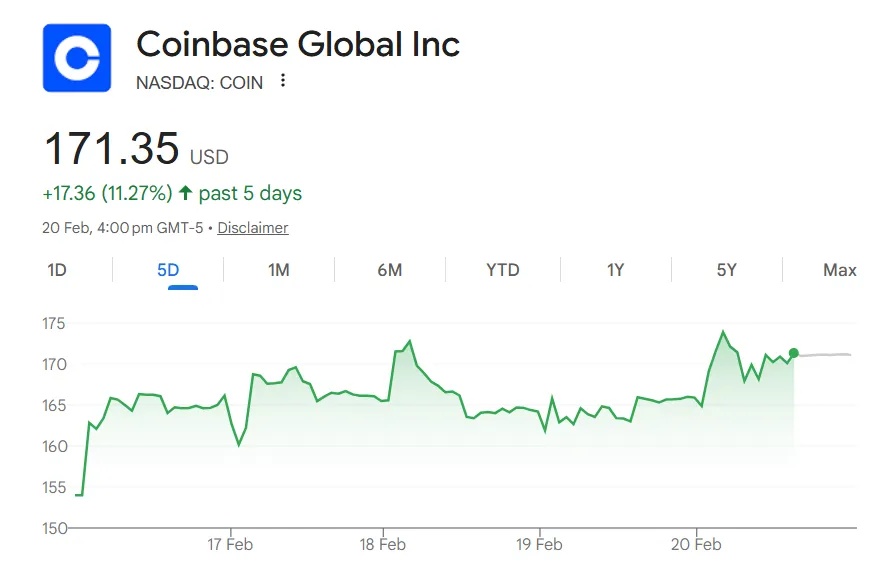
Coinbase Global is considered one of the more straightforward blockchain stocks to invest in and derives revenue from blockchain-related activity. Additionally, Coinbase is the largest regulated US crypto exchange and earns revenue from transaction fees, institutional custody, staking, and subscription services. Coinbase’s business model is more closely related to the acceleration of blockchain adoption compared to many of the larger technology companies that have a diversified approach to their business, with indirect blockchain contact.
Blockchain Context: One recent development that distinguishes Coinbase from other cryptocurrency exchanges is its development of a Layer-2 network called Base on Ethereum, which generates high-margin sequencer transaction fees and provides Coinbase with an infrastructure role by building upon the Ethereum blockchain. Institutional custody is another primary driver for Coinbase’s growth strategy, as it holds digital assets for several hedge funds, asset managers, and ETF issuers, thus positioning itself well as the traditional finance world adopts blockchain-related products.
Drivers:
- Leadership within the institutional custody space
- International expansion through compliant licensing frameworks
- Diversification through derivatives and staking opportunities
Risk: Risks include fee compression driven by decentralised exchanges, as well as continued regulatory scrutiny.
2. Block, Inc. (SQ)
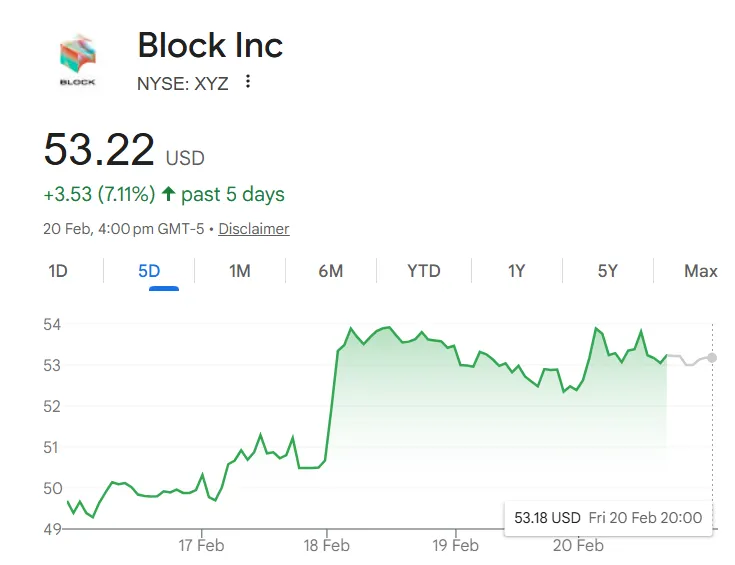
Block, Inc. operates at the confluence between conventional fintech and decentralised digital currencies via a product suite that originated in merchant payments. Over time, it has transformed into one of the leading blockchain stocks to invest in because of how it has now embedded Bitcoin into its products throughout its entire ecosystem.
Block has implemented blockchain into its Cash App application, letting millions of customers buy, sell, send, and hold Bitcoin from within a mainstream banking application. This ease of use allows customers to engage with crypto, generating revenue from transaction fees. On the merchant side, Block’s digital payment network makes it possible for merchants that require quick, low-cost digital payment solutions.
Blockchain Context: Block is uniquely positioned, as the Lightning Network integrated within their products provides very low-cost, near-instant Bitcoin payments. This positions Block favourably in the global remittance market, where speed and transaction costs matter. Furthermore, the development of Bitkey, Block’s digital wallet program, provides additional secure self-custody options that are consistent with the blockchain’s overall decentralisation philosophy.
Drivers:
- Cash App’s expanding Bitcoin ecosystem
- Continued development of decentralised web and identity tools
- Continued use and growth of global remittances and peer-to-peer payments
Block represents an important way for investors to achieve diversification between merchant services and consumer financial services with its “Bitcoin for Everyone” ecosystem within Cash App and TBD decentralised web platforms.
3. NVIDIA (NVDA)
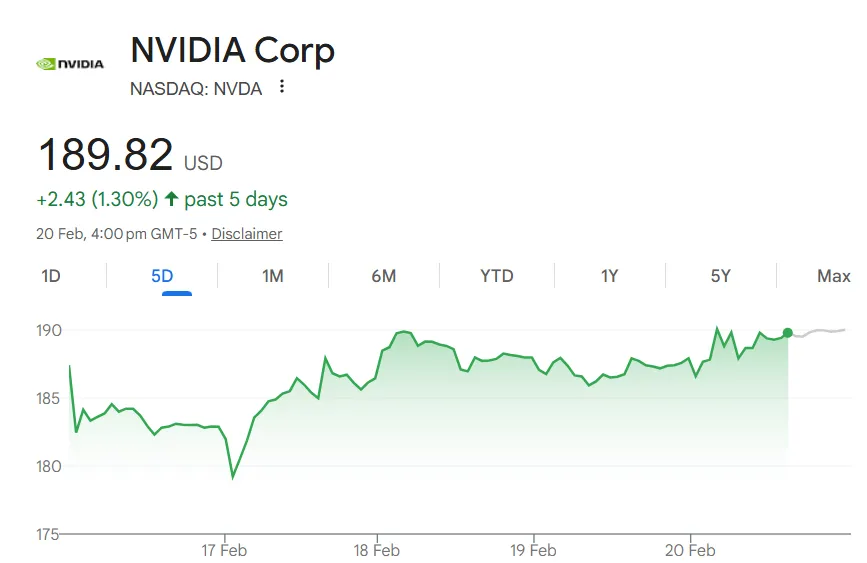
NVIDIA is at the forefront of the merging of AI and blockchain technology. Even though it is not a crypto company, it still plays an essential role in providing the computational backbone of decentralised systems. NVIDIA has high-performance GPUs that allow for more efficient parallel processing of computer tasks than traditional CPUs.
NVIDIA provides high-end chips that are required for zero-knowledge proofs, cryptographic hashing, and many other very complicated computations needed for blockchain technologies. As these systems continue to evolve into modular structures with scalable designs, the demand for specialised computing will increase.
Blockchain Context: The necessity of having GPUs perform the zero-knowledge rollups and privacy- and security-related smart contracts, as well as other on-chain methods of verifying transactions, will significantly enhance the need for powerful GPUs. Because NVIDIA is the leading provider of high-performance computing, it serves as a foundation to help blockchain grow.
Drivers:
- Increased deployment of decentralised Physical Infrastructure Networks (DePIN)
- Increased demand for dedicated mining hardware, alongside the demand for advanced validation systems.
Although Nvidia has a diverse revenue source with gaming, data centres, and AI, the blockchain has added additional revenues as the advantage of demand continues, as there is increasingly built-out infrastructure.
4. PayPal (PYPL)
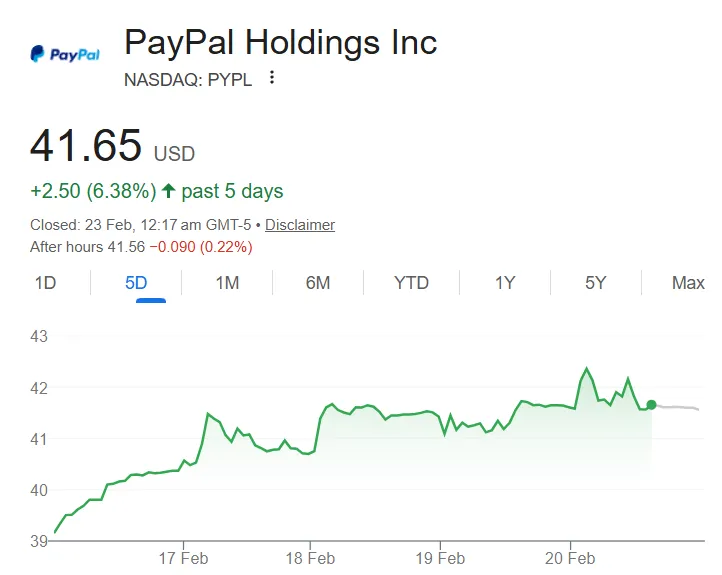
PayPal is a leading global digital payments company that has become a pioneer of stablecoin technology and is positioning itself as the leader in regulated digital financial systems. With decades of experience in providing online payment services and an established global merchant network, PayPal can offer institutional confidence in compliance within the blockchain ecosystem.
Blockchain Context: In the blockchain context, PayPal’s stablecoin, PYUSD, which is backed by the US dollar, represents a valuable bridge of liquidity between traditional and blockchain-based financial systems. PayPal’s integration of PYUSD into its extremely large payment processing network enables the company to facilitate more rapid and programmable payment settlements with its merchants while reducing reliance upon older legacy systems used for cross-border payments. Consequently, PayPal will be a reliable means of executing digital asset payment transactions for businesses that want to use digital assets to make payments but do not want to expose themselves to the risk of volatility in cryptocurrency values.
Drivers:
- The demand for blockchain-based settlement solutions by small and medium-sized businesses (SMEs) is one of the primary drivers of growth.
- For merchants using stablecoins as a means of payment, they will experience faster clearing times, lower transaction costs, and increased flexibility with their treasury.
- PayPal is also increasing its presence in cross-border programmable payment systems where stablecoins will be used to streamline the process for sending remittances, paying suppliers, and engaging in international electronic commerce transactions.
Investors looking for long-term blockchain investments should consider how PayPal can give balanced exposure. Unlike most companies focused solely on cryptocurrency, PayPal has integrated blockchain-related innovation into its overall payment solution while also having multiple revenue sources established through traditional payments/transactions.
5. Microsoft (MSFT)
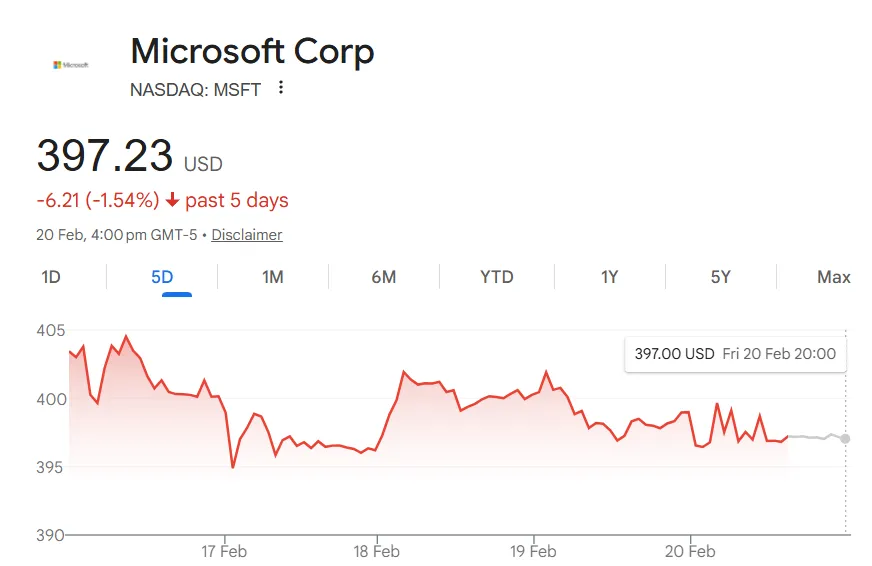
Microsoft is a global “hyperscaler” using its Azure cloud platform to support enterprise blockchain adoption processes. It does not operate solely as a crypto-native company, but provides a foundational infrastructure layer upon which enterprises, government agencies, and developers can safely build, deploy, and manage their own blockchain-based applications and cloud services at scale. This uniquely positions the company amongst the most strategically significant digital asset infrastructure stocks in institutional portfolios.
Blockchain Context: Azure provides enterprise-class distributed ledger solutions, including those that provide supply chain transparency, asset tokenization, and data verification networks. By integrating blockchain capabilities into Microsoft’s broader cloud ecosystem, Azure improves the ability of large-scale enterprises to integrate blockchain into their existing systems for increased efficiency, auditability, and automation. Quorum is a large part of Microsoft’s strategy for blockchain implementation in its Azure cloud service. Quorum was built with enterprise blockchains in mind and is based on the Ethereum technology, but provides support for permissioned blockchains, letting enterprises have privacy features, throughput, and governance elements necessary for companies operating in regulated industries.
Drivers:
- One important driver is AI-integrated smart contract development. The role of Microsoft as a leader in AI infrastructure further supports the convergence between AI and blockchain. The integration of AI-enabled smart contract automation into the Microsoft 365/Microsoft Copilot ecosystem would provide an additional boost to enterprise adoption and help to eliminate administrative friction and improve operational transparency.
- Another catalyst is the increased corporate need for secure digital identity systems. Enterprises and public institutions are making identity authentication, credential validation, and fraud reduction a top priority.
For investors looking for lower volatility exposure to digital asset infrastructure stocks, Microsoft provides portfolio diversification. Blockchain represents a value-add growth opportunity within Microsoft’s broader cloud, AI, and enterprise software business units, making MSFT a relatively low-risk entry into the market.
6. BlackRock (BLK)
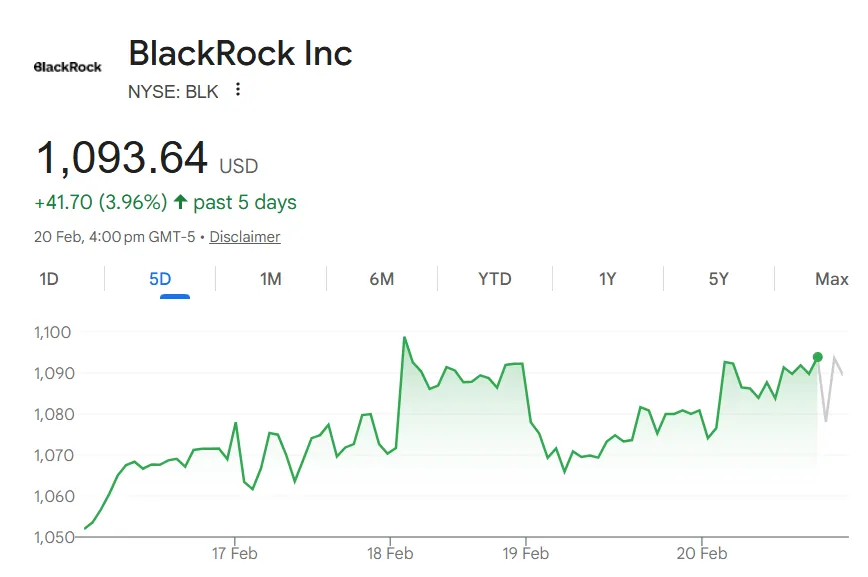
In recent times, BlackRock has become the dominant player in the digital asset infrastructure space for institutional investors. The company is the world’s largest asset manager, and its movement into blockchain-based products signals an important structural change in how the world of traditional finance engages with digital assets. Rather than speculating on digital tokens, BlackRock is focused on creating regulated and scalable investment vehicles that have integrated blockchain into mainstream capital markets.
Blockchain Context: BlackRock’s leadership position in spot crypto ETFs such as the iShares Bitcoin Trust (IBIT) and iShares Ethereum Trust (ETHA) has placed them squarely at the forefront of payment flows into digital assets by institutional investors. Both of these investment products provide compliant and tradable exposure to major cryptocurrencies without requiring the end investor to take actual physical custody of the coins. In addition to the ETFs, BlackRock has established the BUIDL Fund, a tokenized fund that is issued via the blockchain. This landmark move represents progress toward creating an on-chain asset management platform and clearly illustrates how traditional securities can be issued, settled, and managed via distributed ledger technology.
Drivers:
- Tokenization of real-world assets (RWAs) continues to drive its adoption as institutions look to increase liquidity and enhance the ability to acquire fractional ownership of private credit, bond issuances & real estate with near-instant settlement.
- Institutional inflows into regulated digital products reflect increased institutional confidence in regulated blockchain-based digital products.
- BlackRock has become the model of mainstream investment opportunities utilizing digital assets by integrating them into traditional capital market structures.
Investors looking for a regulated financial infrastructure through which to gain exposure to blockchain adoption, as opposed to the direct price volatility of cryptocurrencies, have BLK as a vehicle to do so.
7. J.P. Morgan Chase (JPM)
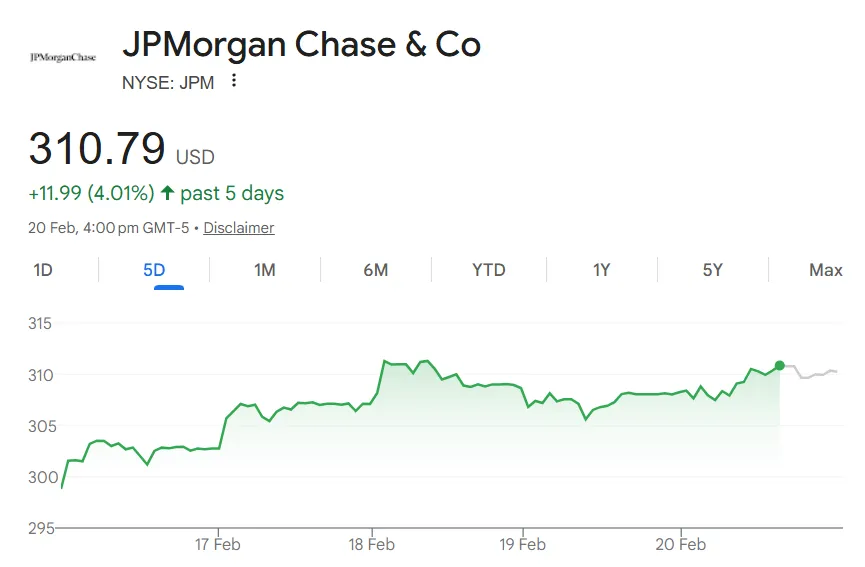
As the leading financial player, J.P. Morgan is not viewing digital currency simply as an investment vehicle but instead has developed a focused approach to incorporate distributed ledger technology directly into financial processes. J.P. Morgan’s Onyx platform is used for updating wholesale payments, liquidity management, and capital markets activity in a scalable way with respect to traditional methods of executing a transaction
Blockchain Context: Onyx products leverage private permissioned blockchains to securely execute valuable transfers between parties. The main source of value being transferred will be via JPM Coin, a bank-sponsored digital currency used to transact between banks for real-time settlement. Many banks can offset their repo activities as well as provide their clients with instant settlement capabilities through mutual custodian or asset manager services offered by banks to their clients. Additionally, by being regulated and closed at transaction completion, J.P. Morgan will be able to standardize its processes while at the same time gain the value associated with the use of blockchain technology in settling transactions.
Drivers:
- Distributed ledgers reduce the need for a lot of manual entries, paperwork, or back-office work done across wholesale bank operations.
- With JPM Coin, live on-time transactions mean that liquidity is more easily accessible, which, in turn, reduces counterparty credit risk in the repo and treasury markets.
- By allowing instant settlement, more capital and collateral will be available to be redeployed by institutions.
Institutions that participate with JPMorgan Chase can be assured that the support and framework of these transactions will meet their needs as a regulated bank.
8. IBM (IBM)
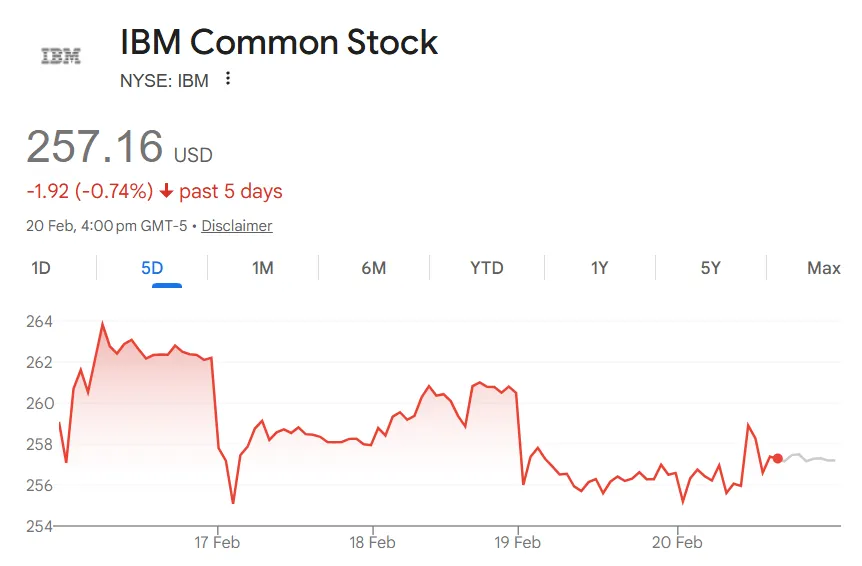
IBM has led the way in providing blockchain technology for businesses for many years, specifically in supply chain management. It brings to bear significant operational efficiencies through increased transparency into operations, as well as reduced fraud and greater efficiency overall. Customers often want to consider partnering with IBM because of their many sustainable and scalable technology solutions that integrate well into the existing IT environment.
Blockchain Context: Using its blockchain systems, IBM powers large-scale networks such as the Global Shipping Business Network (GSBN), which allows shipping companies to track container movements, verify documentation, and ensure compliance with laws in multiple jurisdictions. In the pharmaceutical industry, IBM’s blockchain systems provide end-to-end traceability of drugs from start to finish. Companies can be assured that the drug they are delivering meets all regulatory requirements to ensure patients are not placed at risk by counterfeit medications. Each of these solutions relies on permissioned distributed ledgers that are enterprise-grade; they provide secure, unchangeable, and auditable transaction records.
Drivers:
- Environmental, Social, and Governance (ESG) Compliance will lead to the adoption of blockchain technology for secure, auditable recordkeeping.
- Real-time tracking of product movement, along with immutable ledgers, allows for transparency in the supply chain, thus reducing the likelihood of disputes, delays in shipment, and inefficiencies.
- Due to the verification of transactions on the blockchain, it can help provide proof of origin and authenticity for high-value items such as pharmaceuticals, luxury goods, and food.
By offering regulated, enterprise-ready blockchain solution offerings, IBM is providing investors an opportunity to invest long-term with practical blockchain solutions while maintaining a position of stability and value.
9. Mastercard (MA)
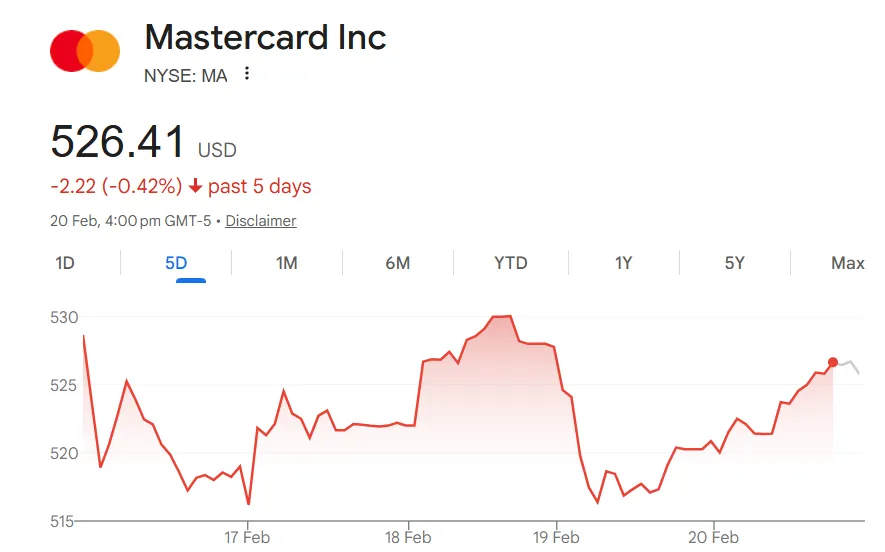
Mastercard (MA) is advancing as a leader in global cross-chain interaction, rather than participating in buying and selling cryptocurrencies. Their focus is on connecting traditional methods of banking and commerce with new forms of currency by using an existing process for bank payments to allow banks, merchants, and fintech organisations to adopt blockchain technology without making any major changes to current banking processes. MasterCard’s position makes it a suitable partner for long-term investment in blockchain assets across various investment types within investment portfolios.
Blockchain Context: Mastercard’s Multi-Token Network (MTN) lies at the heart of its blockchain goals. The MTN system is designed to enable two-way communication between public blocks and private blocks. The MTN network lets banks, credit card companies, and other financial service organisations issue and receive digital currencies, such as Fiat token and stablecoins, directly through the network. By offering banks and payment processors the resources and the framework to operate as a regulated and growing cross-chain integration layer. It is helping simplify the cross-chain process and enabling increased use of blockchain settlement solutions across the various blockchain ecosystems.
- Drivers:
The adoption of digital currencies such as stablecoins and central bank digital currencies (CBDCs). Through MTN, the “last mile” in distributing CBDCs and using stablecoins is facilitated, allowing for the connection of digital currencies to the everyday payment system of the consumer. - The facilitation of cross-border payments through better interoperability saves time and money on transactions between global banks.
- The ability for merchants to accept digital assets without adding infrastructure or risk to their businesses is facilitated through MTN.
Mastercard’s combination of expertise in payments with innovative blockchain technology provides an opportunity for investors to participate in a sustainable, long-term, and regulated blockchain ecosystem.
10. Riot Platforms (RIOT)
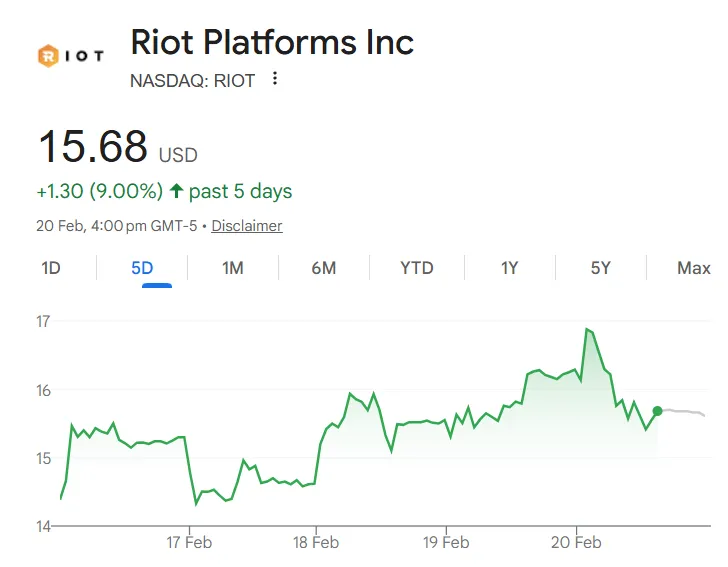
Riot Platforms (RIOT) is a dedicated cryptocurrency infrastructure business headquartered in the United States whose focus is on Bitcoin mining. As opposed to diversified technology or financial-type companies with only a part of their business tied to blockchain, Riot’s business can be understood as strictly tied to the economic characteristics of network security, along with block rewards being received. Due to this fact, Riot presents a high beta investment opportunity for investors looking for a significant investment in the long-term adoption of Bitcoin.
Blockchain Context: Riot has comprehensive vertically integrated Bitcoin mining facilities across the U.S. in addition to having relative vertical integration of their energy purchasing, facility development, and mining hardware implementation. The company has executed long-term agreements for the procurement of energy and has made substantial investments in efficient mining equipment to improve its overall production costs per mined Bitcoin. This operational control enables Riot to maintain a superior level of operational resiliency when there is a downturn in the market and increase its gross margins when the market is bullish.
Drivers:
- With the halving effects from the 2026 hash rate transition still ongoing and the size decrease in the amount of block rewards, the available supply will be decreased, and as such, scarcity value for efficient miners should increase.
- As Bitcoin continues to establish itself as digital gold, blockchain mining stock companies such as Riot will likely benefit from institutional allocation and macro hedge demand.
- Due to the vast amounts of fixed infrastructure needed to mine coins, Tuna’s profitability would increase exponentially when the price of Bitcoin rises.
Riot is a high-risk, high-reward investment within the blockchain infrastructure industry.
Blockchain Stocks vs. Direct Crypto Investing
As digital assets mature, investors increasingly weigh a strategic choice. They either buy cryptocurrencies directly or gain exposure through blockchain technology stocks. The distinction is especially important for blockchain stocks for beginners, who may prefer regulated equity markets over managing private keys and digital wallets.
Risk Comparison
Owning a cryptocurrency carries different risks related to the structure of how the digital currency is created or traded. This exposes investors to liquidation risk associated with leveraged trading, smart contracts, exchanges being unable to handle the volume, or custody breaches. Cryptocurrencies are subject to the risk of being affected by extreme price volatility due to market sentiment, lack of liquidity, or news and regulatory information. Thus, there is no earnings floor or balance sheet that supports valuation. Blockchain technology stocks, such as shares of Coinbase or NVIDIA, are traded on an established corporate structure. All public corporations file audited financial statements, adhere to governance standards, and are subject to regulation. Therefore, they have some associated risks related to bankruptcy risk, competition, and execution. The value of stocks may decline due to various factors, except when stockholders receive a legal claim to the company’s assets vs. tokens issued to holders in most decentralised networks. Therefore, for beginners, buying shares of blockchain-related stocks feels more like an equity transaction that closely resembles “traditional” securities as opposed to a transaction in cryptocurrency, allowing a better position for investors to understand how equity transactions work compared to transactions conducted in the cryptocurrency markets.
Yield & Cash Flow
When comparing stocks and cryptocurrencies, the results that can be measured are starkly different. Stocks offer earnings per share (EPS), dividends, stock buybacks, and cash to be reinvested in the business. Analyses or models like discounted cash flow (DCF) are based on profitability and growth expectations for stock valuation and forecasting. Opposed to this distinction, cryptocurrency may generate staking rewards, rewards for validators, and deflationary schedules. While these can generate periodic “income-like” returns, they are not comparable to how cash is generated in businesses. Yields from tokens depend on the level of participation within networks, the rules of the protocol, and market-based incentives vs. audited earnings.
Institutional Appeal
Many large allocators, such as pension funds and retirement accounts like 401(k), invest primarily in publicly traded companies for structural reasons, because they can be held in traditional brokerage, retirement, and custodial structures without needing to navigate digital wallets or ensure private key security. Tax reporting is the same for stock investments, and compliance departments can evaluate audited disclosures. For institutions, investing in the top blockchain technology stocks can provide access to growth in the digital asset sector without being outside of the mandated regulatory framework. The myriad ETFs, publicly traded blue-chip blockchain companies, and infrastructure providers can provide an institution with a compliant and scalable avenue to access digital asset investments.
Key Risks and Challenges for 2026
Regulatory Fragmentation
A key issue for many blockchain stock companies is the current state of fragmented global marketplaces due to regulatory differences, such as how the U.S., E.U., and other prominent Asian financial centres have different criteria in regulations, licenses, and the way products and services are reported. Hence, companies that wish to expand into other countries will require various regulatory approvals that could involve overlapping or conflicting procedures regarding custody, tokenization, or how much capital is needed, providing a significant cost or delay in getting products into the market, along with competing with many blockchain stock companies where the well-capitalized firms will also be under an increasing amount of pressure to achieve results that may require responding to large policy shifts or enforcement actions, affecting how investors perceive them.
Cyclicality
While many firms involved with blockchain are well diversified in their revenue and resource streams, there is still a strong influence of the 4-year halving event associated with Bitcoin. This could lead to downward pressure on mining and other revenue generation associated with the broader cryptocurrency market. Cyclicality will also affect diversified Blockchain stocks because of earnings volatility that will often follow the direction of the broader digital assets space, as the timing of earnings and the balance sheet of diversified blockchain companies continue to serve as key factors in how blockchain technology stocks perform moving forward.
Technological Obsolescence
Significant changes in technology present serious problems for investors. There is an accelerated rate of change occurring from new technologies that were created based on emerging AI. Two examples of AI being used in verification systems include validating transactions and verifying documents without requiring a decentralised infrastructure. If an AI solution can process transactions faster or at a lower cost than a distributed ledger, some market segments will begin to migrate from using distributed ledgers to centrally located distributed ledger models. An investor’s long-term success with blockchain companies will be determined by how well they can adapt, innovate, and integrate into future AI ecosystem models, and not solely on how well they understand one technology.
Long-Term Outlook: Blockchain as the “Operating System”
In 5-10 years, the divide in value between blockchain-related stocks and traditional tech equities will likely continue to reduce. What is deemed to be a niche area could ultimately develop into core foundational infrastructure woven into the fabric of finance, logistics, digital identity, and capital markets.
The long-term view is that businesses will change from being labelled as “blockchain” companies to simply becoming leading technology companies with integrated distributed ledger capabilities. The definition of speculation and legitimate investment will also change, with speculatively based businesses potentially becoming more diversifiedand blockchain being just one component of their overall digital stack. Based on this view, investors will value today’s blockchain stocks that will, over time, evolve from traditional speculative bases of valuation to those based on the earnings and growth of the companies.
Blockchain networks can serve as an unalterable ledger, which acts as a verification aspect to positively verify that the data records generated, used, and ceasing to exist remain unchanged and tamper-proof. Hence, the reason why AI and the blockchain is a symbiotic relationship that mutually reinforces one another. Blockchain provides verification, traceable ownership, and resistance to tampering through its role as an immutable verification layer for data. This mutually created ecosystem will support itself by creating unique relationships between AI and increased automated transaction volumes, with increased trust and accountability in the blockchain.
As both technologies converge, we will be transitioning from speculative to systemic adoption in this sector, thereby positioning early adopters of infrastructure to experience sustained growth across multiple cycles.
Strategically Navigating the Sector
Investing in the top 10 blockchain stocks for 2026 will provide a diverse ability to participate and balance your exposure to the changing digital and blockchain ecology and economy. You will have a balanced exposure to and participation in all aspects of blockchain adoption, including custody, tokenisation, settlement, compute power, and energy infrastructure.
The second takeaway is character. While the hype created by new technologies and whitepapers has the potential to create a great deal of interest, what ultimately drives long-term returns are fundamentals, including revenue growth, gross profit margins, cash flows, and P/E ratios, as well as having a sustainable competitive advantage.
While the future of finance is likely to be built on programmable assets, successful investing will still be based on disciplined analysis, building diversified portfolios, and maintaining a patient approach to investing.
