
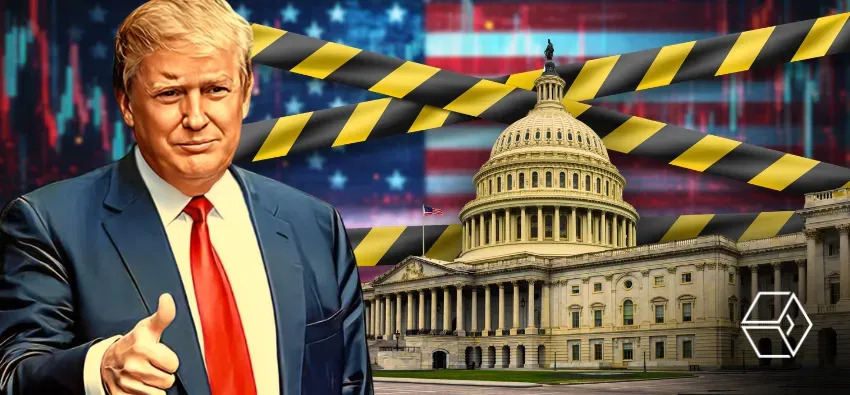
- Trump signs $1.2T bill ending shutdown, while DHS gets only two weeks of funding before talks
- House passes bill 217-215 as Democrats back deal funding agencies through the September 2026 term
- DHS faces a Feb 13 deadline as the immigration policy fight risks another targeted shutdown again
President Donald Trump signed a $1.2 trillion federal funding package into law on Tuesday afternoon, formally ending a brief partial government shutdown that began early Saturday. The signing came just hours after the House approved the legislation, closing the gap between congressional passage and executive action in a high-pressure budget standoff.
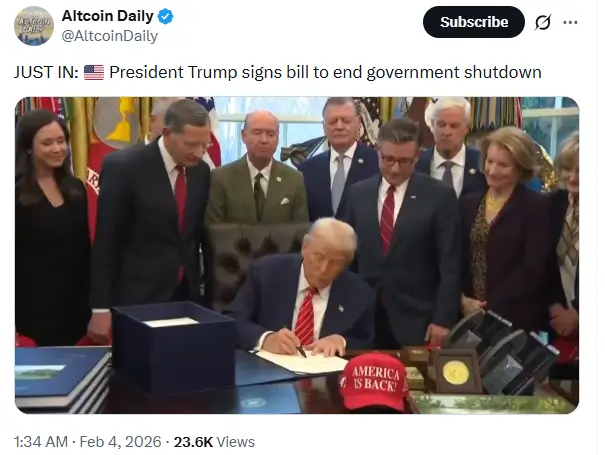
Trump Approves $1.2T Bill to End Shutdown and Fund DHS (Source: X)
The measure, known as the Consolidated Appropriations Act, cleared the House by a narrow 217–215 vote, with 21 Democrats joining Republicans after the Senate passed the bill last week. The law restores operations across most federal agencies through the end of September, stabilizing government functions after several days of disruption tied to expired funding authority.
A Shutdown Ends, But Only Partly
While the bill reopens the government, it does not resolve all funding disputes. The agreement provides only a two-week extension for the Department of Homeland Security, leaving agencies such as the Transportation Security Administration and Federal Emergency Management Agency operating under temporary authority until February 13.
The short window sets up another fiscal deadline and shifts immediate attention to immigration enforcement policy. DHS oversees border security and interior enforcement, including Immigration and Customs Enforcement and Customs and Border Protection, both of which are central to the ongoing political dispute.
Democrats have pushed for changes to enforcement operations following the fatal shooting of two U.S. citizens by federal agents in Minneapolis in January. Party leaders have described DHS as operating without sufficient oversight and are seeking new funding-related constraints.
Immigration Policy Drives the Next Deadline
White House officials made clear that the administration intends to retain control over enforcement decisions. Karoline Leavitt told reporters that the president would remain the final authority on immigration policy, signaling limited openness to congressional mandates that could restrict federal agents’ actions.
House Republican leaders have also echoed that position. Lisa McClain, the fourth-ranking House Republican, said negotiations with Democrats would continue but indicated the White House would take the lead. Her comments underscored the central role the executive branch is expected to play as lawmakers approach the next funding deadline.
In the Senate, Lindsey Graham rejected one Democratic proposal that would require judicial warrants for ICE agents conducting certain operations. Standing alongside Trump during the signing ceremony, Graham argued that such a requirement would limit enforcement capacity, though he acknowledged that some Democratic suggestions warranted discussion.
What Congress Faces Next
With the shutdown resolved for now, lawmakers return to a compressed legislative calendar. Funding for most agencies is locked in through September, but DHS remains a flashpoint that could again halt operations if no agreement is reached.
Notably, negotiations over immigration enforcement are expected to intensify in the coming days, with both parties publicly stating they want to avoid another shutdown. However, the February 13 deadline leaves little room for delay, and failure to pass a longer-term DHS funding plan could trigger a new lapse focused solely on homeland security functions.
For now, the bill restores stability across the federal government while deferring the most contentious issues. The next phase will test whether Congress and the White House can bridge deep policy divisions before the temporary DHS funding expires.