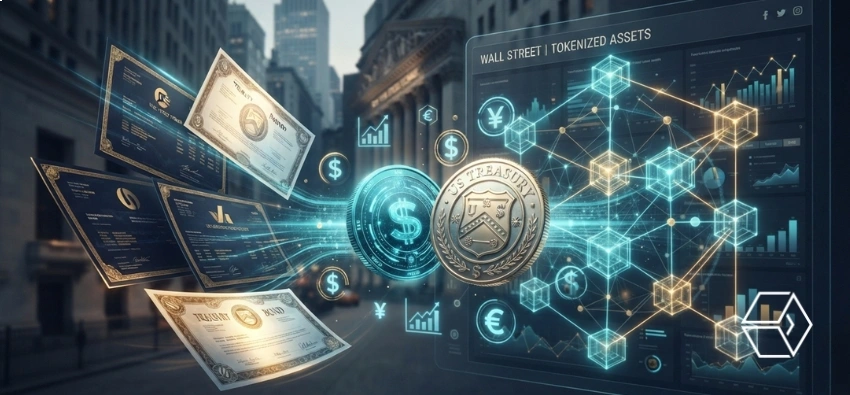
Key highlights:
- Morgan Stanley is one of the first big banks to turn US stocks and Treasury securities into blockchain tokens through DTCC’s new service.
- The platform lets approved institutions create blockchain versions of securities without changing who owns them or the rules that protect investors.
- At launch, 20 financial institutions joined the platform, including JPMorgan, Citi, Bank of America, Fidelity, and Citadel Securities.
- DTCC plans to add integrations with Stellar and Circle’s Arc in 2027 as it grows its blockchain system.
Traditional banks and investment companies are looking for ways to use blockchain in their regular business. Tokenizing securities, basically, turning stocks and bonds into blockchain-based assets is becoming a major area of interest. Morgan Stanley’s move shows how big banks want to connect traditional assets to newer digital systems. It’s happening as more financial companies test digital asset tech for things like stock trading, management, funding, and settling deals.
This push is really about making blockchain work with traditional finance, not replacing it. Financial institutions want to bring in digital infrastructure but still keep current systems running. DTCC’s new service does just that, it lets approved users own tokenized securities within a well-known custody system.
How DTCC’s Tokenization Service Works
The Depository Trust & Clearing Corporation (DTCC) launched its Tokenization Service, called DTS, on October 28. It’s run by the Depository Trust Company (DTC), a DTCC branch that helps with post-trade operations in US markets and manages more than $114 trillion in assets.
With this service, approved users can take securities already held at DTC and turn them into blockchain tokens, or digital twins. These tokens can go into registered digital wallets and be switched back into regular securities anytime.
DTCC says that these digital tokens keep the original securities’ identifiers, ownership rights, financial benefits, and investor protections. DTC stays as the custodian and official record keeper, so turning an asset into a token doesn’t change where it’s held or who keeps track of it.
Right now, DTS runs on the Canton Network and a private Hyperledger Besu network controlled by DTCC. They plan to link up with Stellar and Circle’s Arc in 2027. There’s also a plan for even bigger steps, like bringing in on-chain netting, digital cash, and better settlement and collateral systems.
The regulatory groundwork was set in December 2025, when the Securities and Exchange Commission gave DTC a no-action letter that covers Russell 1000 stocks, some major exchange-traded funds, and US Treasury bills, notes, and bonds under certain rules.
JUST IN: Morgan Stanley has tokenised U.S. stocks and bonds on blockchain
The banking giant is among the first major banks to tokenize U.S. stocks and bonds through the DTCC’s Tokenization Service. https://t.co/BqMQONHGt1
— crypto.news (@cryptodotnews) November 4, 2026
Morgan Stanley and Other Major Institutions Join the Platform
Morgan Stanley is one of 20 DTC users that signed up for DTS at its start. Others include JPMorgan, Citi, Bank of America, Barclays, BNP Paribas, Fidelity Investments, State Street, UBS, and Citadel Securities. DTCC said more than 150 companies helped develop the platform.
The new service builds on real transactions from July, when companies tried out securities lending, moving collateral, and trading US Treasury agreements.
According to Amy Oldenburg, Morgan Stanley’s head of digital assets strategy, testing out tokenized securities alongside regular market infrastructure helps shape the bank’s digital asset plans.
Morgan Stanley is also building its own alternate trading system (ATS) for tokenized equity trading. But, the launch date moved from late 2026 to early 2027 as they work to make sure the products and systems are ready.
Back in September, Morgan Stanley started a Digital Asset Lab. The lab looks at stablecoins, tokenized deposits, money funds, and uses for decentralized finance. They’re also building digital wallets so clients can keep tokenized securities together with traditional investments.
When speaking at the TOKEN2049 event in October, Oldenburg said the main thing slowing demand from institutions is not enough products. She believes the market for tokenized real-world assets could reach $3 to $10 trillion by 2030.
Wall Street’s Other Blockchain Initiatives Face Different Challenges
DTCC’s effort is happening alongside other projects aiming to bring securities to blockchain. Companies like OKX and Intercontinental Exchange (ICE), which owns the New York Stock Exchange, are planning a tokenized stock trading platform. But 56 companies including Tesla, SpaceX, Amazon, and Nvidia objected to having their shares traded on the planned OKX-ICE TSV platform. Because of these objections, third-party tokenized versions of these stocks can’t be listed under SEC rules.
Meanwhile, the New York Stock Exchange said on November 2 that companies like Broadridge, Computershare, Equiniti, and Superstate joined its proposed blockchain trading platform as partners. Others like Securitize and tZERO are also involved. The plan is to allow continuous trading, instant settlement, and using stablecoins for payments, while protecting regular shareholder rights. The platform still needs regulatory approval and there’s no official launch date yet.
But tokenization isn’t perfect. A recent International Monetary Fund study found tokenized stocks mostly trade outside US market hours and are still more volatile and less liquid than regular stocks. This shows there are still challenges as financial companies keep testing out blockchain technology.