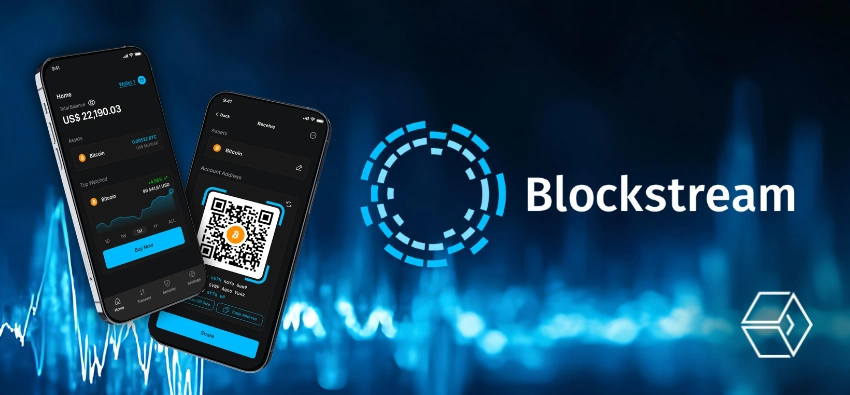
Blockstream has launched a public beta of Blockstream Swaps, an atomic swap service for Bitcoin, Lightning, and Liquid, after fellow provider Boltz suspended its swap services earlier this month, citing a rise in automated and AI-assisted attacks against its infrastructure. Blockstream said the service was already in development before the suspension and is intended to add another provider to the ecosystem rather than replace existing services.
Boltz said on Aug. 3 that its swap services would remain disabled until further notice after dealing with several exploits. Boltz said the incidents had been contained and that user funds were never at risk, since its swaps are non-custodial. The company absorbed operational losses on its own books and kept its refund API live. Blockstream Swaps is in public beta, with the company seeking organisations to help test it before a wider release.
The situation has since escalated. On August 13, Boltz announced that its three founders had stepped down, handing control to a group it identified only as veteran Bitcoiners. Kilian Rausch, Michael and Karl said none would hold any further formal role at the company. The swap service has remained offline since August 3.
What Happened to Boltz, and What Blockstream Is Building
Blockstream’s service is designed to let users move funds between Bitcoin’s main chain, the Lightning Network, and Liquid without relying on a centralized exchange for the conversion. The company said the initiative was already under development as part of its work on infrastructure for Lightning and Liquid, with recent events reinforcing the need for additional providers.
Boltz announced on Aug. 3 that its swap services would remain disabled until further notice. The company said it had seen a steady increase in automated, AI-assisted probing of its infrastructure over several months and had dealt with several exploits. Boltz put it bluntly, saying, “Attackers now iterate faster than a team our size can find and patch.”
Update: Boltz will stay disabled until further notice.
Our API remains available to process refunds cooperatively. In any case, unilateral refunds will work, as they do not depend on our infrastructure.
Our support team stays reachable.
To be clear: this is not a response to a… HTTPS://T.CO/KV8ZWT4BYM
— Boltz – Non-Custodial Bitcoin Bridge (@Boltzhq) AUGUST 3, 2026
Boltz’s architecture was non-custodial, meaning users retained control of their funds rather than depositing them with the service. Blockstream noted that Boltz’s non-custodial architecture meant no user funds were at risk during the incidents.
Blockstream is presenting its service as another option rather than a replacement for Boltz or other providers. The company said multiple providers can add redundancy to the infrastructure connecting Bitcoin, Lightning, and Liquid.
A swap connects different parts of the Bitcoin ecosystem. A submarine swap can move BTC or Liquid Bitcoin, known as LBTC, into Lightning. A reverse submarine swap moves funds from Lightning back to Bitcoin or Liquid, while a chain swap allows BTC and LBTC to be exchanged between the Bitcoin and Liquid networks.
The suspension had immediate downstream effects. Aqua, Bull Bitcoin, and ZEUS all lost swap functionality, and Blockstream turned off in-app swaps in its own wallet because it too relied on Boltz infrastructure. ZEUS, which ran its own copy of Boltz’s open-source software, shut that down as well. All four began looking at alternatives or building redundancy so that a single provider going offline would not take swaps with it.
These transactions can use atomic-swap mechanisms that link both sides of a trade through cryptographic conditions. In an HTLC-based swap, funds are locked using a hash and a time condition. The required secret allows one side to claim the funds, while the time-based refund mechanism allows the original owner to recover them if the swap does not complete.
Blockstream also points to LiquiDEX, a protocol it developed for trustless swaps between Liquid assets. Unlike an HTLC-based swap, LiquiDEX can structure a trade within a single transaction using Bitcoin’s signature mechanisms, without requiring a secret or a timeout.
How Swaps Simplify Access to Lightning
The main purpose of a swap is to reduce some of the technical work involved in moving between Bitcoin’s different networks. Using Lightning directly can require users to operate a node, open payment channels, and manage liquidity. A swap service can handle the conversion while the user interacts primarily with their existing Bitcoin or Liquid balance.
Someone holding BTC on the Bitcoin mainchain could use a submarine swap when they need to pay a Lightning invoice. In the opposite direction, a reverse submarine swap can move Lightning funds back to Bitcoin or Liquid. The atomic-swap mechanism is designed to link the two sides so that a failed transaction does not leave one party without a refund.
The model can also be used by merchants who accept Lightning but prefer to hold their proceeds as BTC or LBTC. Blockstream also highlighted a use case involving its Jade hardware wallet, where an incoming Lightning payment can settle as LBTC in a Jade-secured wallet without requiring the hardware device to remain online.
The launch does not remove the security risks associated with operating swap infrastructure. Boltz’s suspension illustrates that non-custodial design does not eliminate vulnerabilities in the software and infrastructure running the service.
Blockstream will face the same requirement as it moves its own implementation through testing. Blockstream said the new service is currently in beta testing with selected participants and that it is seeking organizations to help test it before a wider release.
The company has not announced a general launch date. For now, the immediate development is the arrival of another swap provider while Boltz remains offline. The longer-term significance will depend on how Blockstream’s service performs during testing, its security record, and whether users and applications adopt it once it becomes generally available.