

- Arizona Bill would lift state taxes on crypto use and blockchain operations.
- Tax relief could draw miners, developers, and investors into Arizona’s tech corridor.
- Lawmakers say the plan positions the state for stronger digital asset growth.
Arizona lawmakers are pushing ahead with a set of proposals that could strip away state-level taxes on cryptocurrency activity, a shift that supporters say may draw new blockchain investment into the region.
The package, referred to collectively, though not formally, as the Arizona Bill, has started to reshape discussion among policymakers and digital asset firms already watching the state’s rapid posture change in the sector.
Tax Exemptions Target Digital Asset Growth
According to reports, state senator Wendy Rogers is backing several measures intended to loosen Arizona’s tax grip on digital assets. One part of the Arizona bill, SB 1044, would exempt virtual currency from state taxes outright.
Another, SB 1045, would prohibit cities and counties from imposing extra fees or taxes on blockchain node operators. A related constitutional resolution, SCR 1003, would make clear in Arizona’s founding law that digital assets should not fall under property taxation.
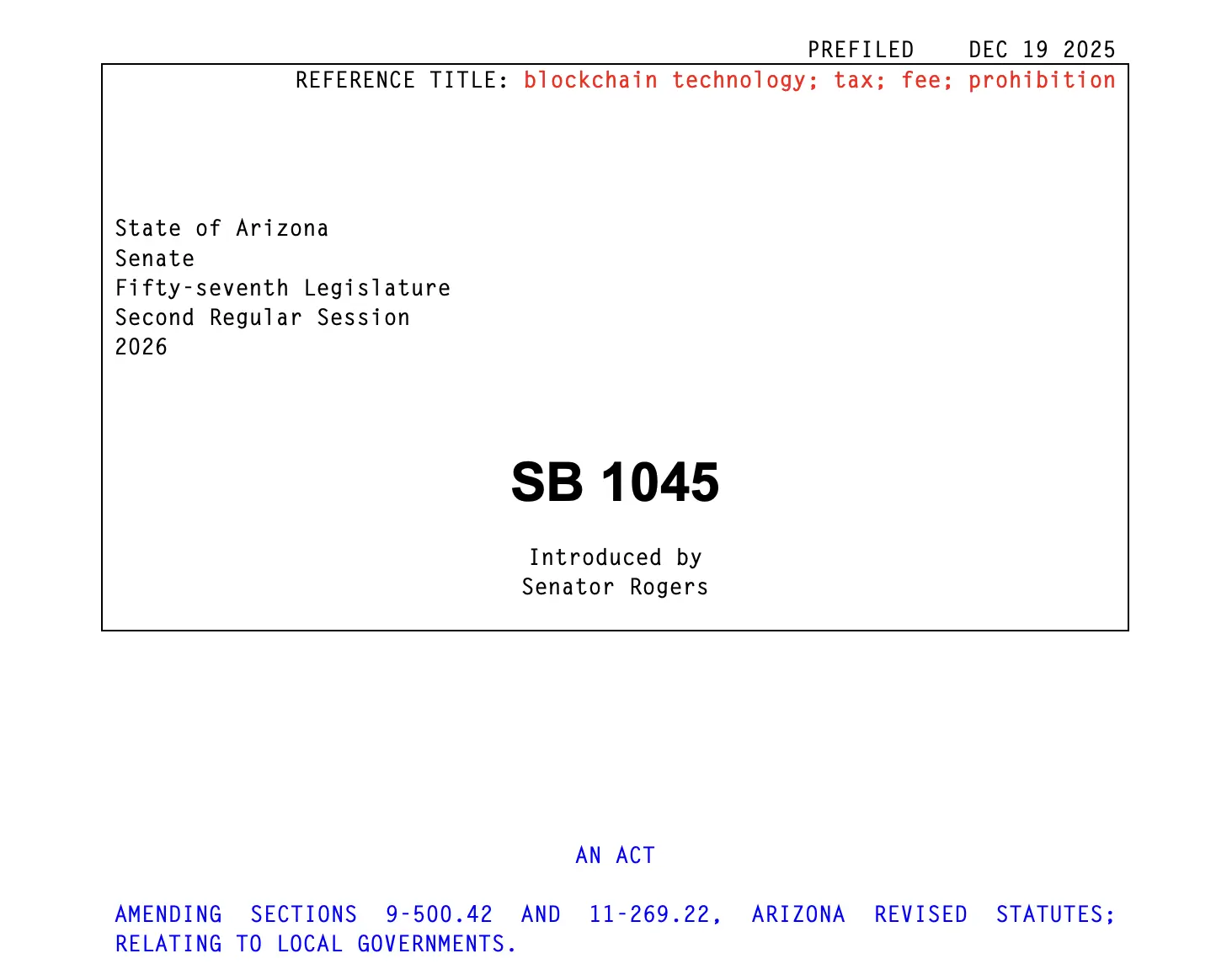
Arizona Bill Targets Crypto Tax Cuts to Spur Blockchain (Source: Arizona legislature)
If these proposals clear the legislature, much of the tax friction tied to crypto transactions, mining payouts, or staking rewards could disappear at the state level. That has caught the attention of miners and infrastructure developers, who often point to taxes as one of the bigger operational burdens in maintaining large computing systems.
One such, the Stevens Center for Innovation in Finance, noted that the Arizona bill could push the state into the upper tier of crypto-friendly jurisdictions, at least in terms of cost relief. The Center further pointed out that while Arizona already experimented with clarifying digital asset tax language in prior years, this round of legislation marks a noticeably sharper pivot.
Arizona Joins Growing State-Level Competition
Though the policy moment is not isolated. Texas has moved in a different direction by launching a Strategic Bitcoin Reserve, committing state resources to long-term exposure. Meanwhile, Ohio has floated reforms that would carve out small crypto payments from capital gains reporting.
State legislators across the country are testing varied approaches, looking for ways to draw companies that now scan the map for regulatory consistency and lighter overhead. Within that context, the Arizona bill stands out because it attempts to remove, not just reduce, tax burdens. However, industry groups argue that such a move could free up capital for hiring and technical expansion in a way that gradual adjustments cannot.
Several blockchain firms have privately indicated that Arizona’s stance, if finalized, might push them to reconsider where they build or scale out validator networks. Of course, cost relief is never a single-variable equation. Budget analysts warn that sweeping exemptions could suppress tax revenue and place pressure on future funding debates.
Others highlight the risk of diverging state-level rules while federal tax guidance remains incomplete, suggesting that investors may face inconsistent compliance expectations across borders.
Industry Reaction and Economic Stakes
Even with the uncertainty, miners and infrastructure operators addressed the Arizona Bill with interest. Many said that stripping away state taxes could meaningfully ease the economics of running high-throughput hardware, especially for firms hovering between expansion and retreat.
Institutional investors have also shown quiet curiosity. They tend to look for the blend of cost clarity and predictable regulatory treatment, and Arizona’s positioning ticks more of those boxes than it did a year ago. Some analysts say the state’s energy profile and existing tech presence already offer a workable foundation; if tax exposure drops further, the calculation could shift again.
Still, the long-term impact of the Arizona Bill depends on several steps that have yet to play out. Voters would need to weigh in on the constitutional amendment, possibly in the November 2026 cycle. Legislative committees are expected to dissect the tax and property portions over the coming session, and the language could shift in the process.
Next Steps Toward Adoption
For now, Arizona has become a surprisingly central testing ground for crypto-tax reform. The Arizona bill could redefine how states treat the digital asset economy, especially if others follow with similar exemptions. Whether these moves create a rush of new blockchain investment or simply spark another round of competitive policymaking will become clearer as lawmakers advance the proposals through the next stage.